
Loading...
Pubblicazioni Scientifiche
Filtri di ricerca 26 risultati
Pubblicazioni per anno
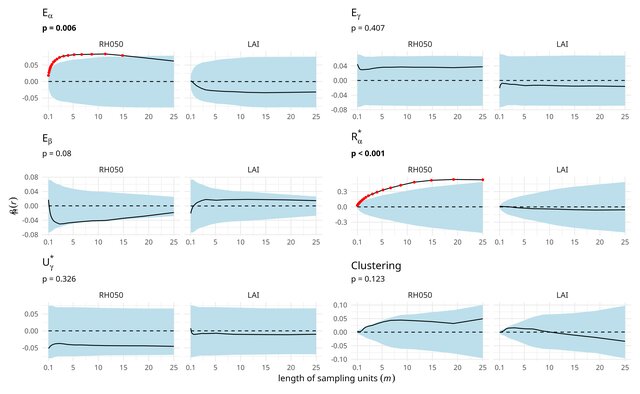
Forest structure and understory functional diversity at multiple scales: The importance of median tree height
de Benedictis
,
Luciano Ludovico Maria
,
Chelli
,
Stefano
,
Zhu
,
Zhengxue
,
Cervellini
,
Marco
,
Canullo
,
R.
,
Chianucci
,
Francesco
,
Puletti
,
Nicola
,
Tsakalos
,
James L.
,
Bartha
,
Sándor
,
Campetella
,
Giandiego

LAIr: an R package to estimate LAI from Normalized Difference Vegetation Index
Bajocco
,
Sofia
,
Ferrara
,
Carlotta
,
Savian
,
Francesco
,
Ginaldi
,
Fabrizio
,
Puletti
,
Nicola
,
Crecco
,
Lorenzo
,
Bregaglio
,
Simone Ugo Maria
,
Chianucci
,
Francesco
Mostra abstract
Leaf area index (LAI) is an important biophysical parameter describing vegetation. LAI is typically retrieved from optical remote sensing by empirical models relating LAI to vegetation indices, such as the Normalized Difference Vegetation Index (NDVI). As the relationship between LAI and NDVI is non-linear and crop type dependant, several specific empirical equations relating LAI to NDVI have been developed using field data. This study presented LAIr, an R package to derive LAI from NDVI data from the most comprehensive library of conversion equations. In the package, the range of functions differs on environmental factors, sensors, and vegetation types, allowing flexibility in choosing appropriate options based on specific application, scale of investigation and data availability. We illustrated the use of the package with a case study to compare a generic LAI product with specific NDVI-based LAI estimations. By leveraging empirical knowledge, LAIr enables accurate and context-specific estimation of LAI. The deployment of an open-source R package serves as a valuable tool for aiding researchers in selecting the most appropriate equations for conducting NDVI-to-LAI conversion. © 2024
Multiple drivers of functional diversity in temperate forest understories: Climate, soil, and forest structure effects
Chelli
,
Stefano
,
Bricca
,
Alessandro
,
Tsakalos
,
James L.
,
Andreetta
,
Anna
,
Bonari
,
Gianmaria
,
Campetella
,
Giandiego
,
Carnicelli
,
Stefano
,
Cervellini
,
Marco
,
Puletti
,
Nicola
,
Wellstein
,
Camilla
,
Canullo
,
R.
climate change
functional diversity
bud bank
forest management
plant height
seed mass
specific leaf area
Mostra abstract
In macroecology, shifting from coarse- to local-scale explanatory factors is crucial for understanding how global change impacts functional diversity (FD). Plants possess diverse traits allowing them to differentially respond across a spectrum of environmental conditions. We aim to assess how macro- to microclimate, stand-scale measured soil properties, forest structure, and management type, influence forest understorey FD at the macroecological scale. Our study covers Italian forests, using thirteen predictors categorized into climate, soil, forest structure, and management. We analyzed five traits (i.e., specific leaf area, plant size, seed mass, belowground bud bank size, and clonal lateral spread) capturing independent functional dimensions to calculate the standardized effect size of functional diversity (SES-FD) for all traits (multi-trait) and for single traits. Multiple regression models were applied to assess the effect of predictors on SES-FD. We revealed that climate, soil, and forest structure significantly drive SES-FD of specific leaf area, plant size, seed mass, and bud bank. Forest management had a limited effect. However, differences emerged between herbaceous and woody growth forms of the understorey layer, with herbaceous species mainly responding to climate and soil features, while woody species were mainly affected by forest structure. Future warmer and more seasonal climate could reduce the diversity of resource economics, plant size, and persistence strategies of the forest understorey. Soil eutrophication and acidification may impact the diversity of regeneration strategies; canopy closure affects the diversity of above- and belowground traits, with a larger effect on woody species. Multifunctional approaches are vital to disentangle the effect of global changes on functional diversity since independent functional specialization axes are modulated by different drivers. © 2024 The Authors
From model selection to maps: A completely design-based data-driven inference for mapping forest resources
Di Biase
,
Rosa Maria
,
Fattorini
,
Lorenzo
,
Franceschi
,
Sara
,
Grotti
,
Mirko
,
Puletti
,
Nicola
,
Corona
,
P.
density estimation
harmonization
model selection
predictions
pseudopopulation bootstrap
regression estimator
residuals
smoothing parameter
spatial interpolation
Mostra abstract
A completely data-driven, design-based sampling strategy is proposed for mapping a forest attribute within the spatial units tessellating a survey region. Based on sample data, a model is selected, and model parameters are estimated using least-squares criteria for predicting the attribute of interest within units as a linear function of a set of auxiliary variables. The spatial interpolation of residuals arising from model predictions is performed by inverse distance weighting. The leave-one-out cross validation procedure is adopted for selecting the smoothing parameter used for interpolation. The densities of the attributes of interest within units are estimated by summing predictions and interpolated residuals. Finally, density estimates are rescaled to match the total estimate over the survey region obtained by the traditional regression estimator with the total estimate obtained from the map as the sum of the density estimates within units. A bootstrap procedure accounts for the uncertainty. The consistency of the strategy is proven by incorporating previous results. A simulation study is performed and an application for mapping wood volume densities in the forest estate of Rincine (Central Italy) is described. © 2022 John Wiley & Sons Ltd.
Above-ground biomass prediction by Sentinel-1 multitemporal data in central Italy with integration of ALOS2 and Sentinel-2 data
Vaglio Laurin
,
Gaia
,
Balling
,
Johannes
,
Corona
,
P.
,
Mattioli
,
Walter
,
Papale
,
Dario
,
Puletti
,
Nicola
,
Rizzo
,
Maria
,
Truckenbrodt
,
John
,
Urban
,
Marcel
Mostra abstract
The objective of this research is to test Sentinel-1 SAR multitemporal data, supported by multispectral and SAR data at other wavelengths, for fine-scale mapping of above-ground biomass (AGB) at the provincial level in a Mediterranean forested landscape. The regression results indicate good accuracy of prediction (R2=0.7) using integrated sensors when an upper bound of 400Mg ha-1 is used in modeling. Multitemporal SAR information was relevant, allowing the selection of optimal Sentinel-1 data, as broadleaf forests showed a different response in backscatter throughout the year. Similar accuracy in predictions was obtained when using SAR multifrequency data or joint SAR and optical data. Predictions based on SAR data were more conservative, and in line with those from an independent sample from the National Forest Inventory, than those based on joint data types. The potential of S1 data in predicting AGB can possibly be improved if models are developed per specific groups (deciduous or evergreen species) or forest types and using a larger range of ground data. Overall, this research shows the usefulness of Sentinel-1 data to map biomass at very high resolution for local study and at considerable carbon density. © The Authors. Published by SPIE under a Creative Commons Attribution 3.0 Unported License. Distribution or reproduction of this work in whole or in part requires full attribution of the original publication, including its DOI.
Mapped tree dataset of public green areas in the Municipality of Arezzo, Tuscany (Italy)
Chianucci
,
Francesco
,
Sansone
,
Dalila
,
Lazzerini
,
Giada
,
Tiberi
,
Gioele
,
Cristina Monteverdi
,
Maria
,
Chiavetta
,
U.
Mostra abstract
The dataset reports data from more than 9,000 trees, which were sampled in 2024-2025 to create a first urban tree inventory of public green areas in the Municipality of Arezzo. For each tree, spatial position, species, diameter were sampled in different public green space types. Data are available as table and spatial vector layer. Data can support urban planners and managers for assessing the state-of-the-art of urban greening, supporting tree management practices and monitoring, feeding urban tree models and calibrating remotely-sensed information. Non-spatial and spatial metrics can be derived to assess the diversity of urban tree spaces to implement sustainable urban greening practices. © 2025 Istituto Sperimentale per la Selvicoltura. All rights reserved.
Comparison of TLS against traditional surveying method for stem taper modelling. A case study in European beech (Fagus sylvatica L.) forests of mount Amiata
Torresan
,
C.
,
Pelleri
,
F.
,
Manetti
,
Maria Chiara
,
Becagli
,
Claudia
,
Castaldi
,
Cristiano
,
Notarangelo
,
Monica
,
Chiavetta
,
U.
Mostra abstract
Traditionally, taper equations are developed from measurements collected through a destructive sampling of trees. Terrestrial laser scanning (TLS) enables high levels of accuracy of individual tree parameters measurement avoiding tree felling. With this study, we wanted to assess the performance of two approaches to calibrate a taper function: using stem diameters extracted from TLS point clouds and measured at different tree heights with the traditional and usual forest instruments. We compared the performance of four taper equations built with data collected by TLS and traditional survey in a European beech (Fagus sylvatica L.) forests of mount Amiata (Tuscany Region, Italy). We computed the volume of stem sections 1.00 m long by integrating the most performing TLS-based taper equation and by the Huber, Smalian and cone formulas applied on the diameter and height values measured with the traditional field surveys. We conducted the analysis of error distribution in volume estimates computed integrating the most performing TLS-based taper function along the stem. We tested if the differences in the volume estimate of the two methods were significant. Schumacher and Hall (1933) equation was the most performing taper function both in case of using TLS and traditional surveyed data, being the TLS-based function more performant (rRMSE = 6.90% vs 9.17%). Its performance did not increase when diameter values were extracted from TLS point clouds with a higher frequency (i.e. 25.0 cm vs 1.00 m). By integrating the TLS-based Schumacher and Hall (1933) function, the sections with the highest error resulted from 5.00 to 7.00 m of stem height (i.e. RMSE from 14.72 to 19.14 dm<sup>3</sup> and rRMSE from 13.00 to 17.76%). This study case represents the first attempts to develop a taper equation for European beech of mount Amiata using values of stem diameter and height extracted from the TLS point cloud. The results demonstrated that TLS produces the same stem volume estimates as traditional method avoiding falling trees. © 2021 Centro di Ricerca per la Selvicoltura, Consiglio per la Ricerca in Agricoltura e l'Analisi dell'Economia Agraria. All rights reserved.
Monitoring spring phenology in Mediterranean beech populations through in situ observation and Synthetic Aperture Radar methods
Proietti
,
R.
,
Antonucci
,
Serena
,
Monteverdi
,
Maria Cristina
,
Garfì
,
Vittorio
,
Marchetti
,
Marco
,
Plutino
,
Manuela
,
Di Carlo
,
Marco
,
Germani
,
Andrea
,
Santopuoli
,
Giovanni
,
Castaldi
,
Cristiano
,
Chiavetta
,
U.
Mostra abstract
The interest in tree phenology monitoring is increasing because this trait is a robust indicator of the impacts of climate change on natural and managed ecosystems. Different approaches to monitor phenology at different spatial scales, from in situ monitoring to remote sensing, are used to investigate spring and/or autumn phenological changes. In Mediterranean area, most of phenological changes occur during cloudy periods (spring and autumn), leading to a loss of information also for very high temporal resolution satellites. Instead, cloud-uninfluenced sensors, such as radar sensors, can allow to bypass this problem and produce a temporally continuous coverage. In this paper, we analyzed the spring phenology of two European beech (Fagus sylvatica L.) populations, located at different latitudes in Mediterranean area. Weekly in situ monitoring of leaf-out has been correlated with data collected by Synthetic Aperture Radar. Spring phenological phases were monitored in situ following a modified BBCH-code with a 5-scores scale (from 1 - buds closed and covered by scales, to 5 - leaf completely unfolded). The score 3 (young leaves starting to emerge from the bud) was considered the bud break. Different site conditions based on aspect (northern and southern) and altitudinal gradient (high and low altitude) have been considered. The aim was to test and implement a new methodology able to decrease the frequency of the field sampling, using remote data, to extend more detailed information on geographical scale, and to reconstruct past phenology. Results showed a statistically significant different length of the vegetative spring period, spanning from dormant buds, up to leaves completely unfolded, between sites. Through Synthetic Aperture Radar estimation, this study demonstrates that leaf-out can be monitored with an extreme accuracy. The phenophase score 4 and 5 estimation showed the best performance (RMSE < of 4 days), phenophases score 2 and 3 showed promising performances (4 days < RMSE <5 days), while phenophases score 1 seems to be not easily detectable, although it can be extrapolated with an RMSE <6 days. This radar approach fixes the cloud problem typical of multispectral approach and very frequent in phenophase change periods in Mediterranean climate. This study promotes the proposed remote sensing approach as a very useful tool to monitor growing season starting in remote areas, helping to reduce in situ observations and allowing past phenology reconstruction. © 2020 Elsevier Inc.
TRY plant trait database – enhanced coverage and open access
Kattge
,
Jens
,
Bönisch
,
Gerhard
,
Díaz
,
Sandra M.
,
Lavorel
,
Sandra
,
Prentice
,
Iain Colin
,
Leadley
,
Paul W.
,
Tautenhahn
,
Susanne
,
Werner
,
Gijsbert
,
Aakala
,
Tuomas
,
Abedi
,
Mehdi
,
Acosta
,
Alicia Teresa Rosario
,
Adamidis
,
George C.
,
Adamson
,
Kairi
,
Aiba
,
Masahiro
,
Albert
,
Cécile Hélène
,
Alcántara
,
Julio M.
,
Alcázar C
,
Carolina
,
Aleixo
,
Izabela
,
Ali
,
Hamada E.
,
Amiaud
,
Bernard
,
Ammer
,
Christian
,
Amoroso
,
Mariano Martín
,
Anand
,
Madhur
,
Anderson
,
Carolyn G.
,
Anten
,
Niels P.R.
,
Antos
,
Joseph A.
,
Apgaua
,
Deborah Mattos Guimarães
,
Ashman
,
Tia Lynn
,
Asmara
,
Degi Harja
,
Asner
,
Gregory P.
,
Aspinwall
,
Michael J.
,
Atkin
,
Owen K.
,
Aubin
,
Isabelle
,
Baastrup-Spohr
,
Lars
,
Bahalkeh
,
Khadijeh
,
Bahn
,
Michael
,
Baker
,
Timothy R.
,
Baker
,
William J.
,
Bakker
,
Jan P.
,
Baldocchi
,
Dennis D.
,
Baltzer
,
Jennifer L.
,
Banerjee
,
Arindam
,
Baranger
,
Anne
,
Barlow
,
Jos B.
,
Barneche
,
Diego R.
,
Baruch
,
Zdravko
,
Bastianelli
,
Denis
,
Battles
,
John J.
,
Bauerle
,
William L.
,
Bauters
,
Marijn
,
Bazzato
,
Erika
,
Beckmann
,
Michael
,
Beeckman
,
Hans
,
Beierkuhnlein
,
Carl
,
Bekker
,
Renée M.
,
Belfry
,
Gavin
,
Belluau
,
Michaël
,
Beloiu Schwenke
,
Mirela
,
Benavides
,
Raquel
,
Benomar
,
Lahcen
,
Berdugo-Lattke
,
Mary Lee
,
Berenguer
,
Erika
,
Bergamin
,
Rodrigo Scarton
,
Bergmann
,
Joana
,
Carlucci
,
Marcos B.
,
Berner
,
Logan T.
,
Bernhardt-Römermann
,
Markus
,
Bigler
,
Christof
,
Bjorkman
,
Anne D.
,
Blackman
,
Chris J.
,
Blanco
,
Carolina Casagrande
,
Blonder
,
Benjamin Wong
,
Blumenthal
,
Dana M.
,
Bocanegra-González
,
Kelly Tatiana
,
Boeckx
,
Pascal
,
Bohlman
,
Stephanie Ann
,
Böhning-Gaese
,
Katrin
,
Boisvert-Marsh
,
Laura
,
Bond
,
William J.
,
Bond-Lamberty
,
Ben P.
,
Boom
,
Arnoud
,
Boonman
,
Coline C.F.
,
Bordin
,
Kauane Maiara
,
Boughton
,
Elizabeth H.
,
Boukili
,
Vanessa K.S.
,
Bowman
,
David M.J.S.
,
Bravo
,
Sandra Josefina
,
Brendel
,
Marco R.
,
Broadley
,
Martin R.
,
Brown
,
Kerry A.
,
Bruelheide
,
Helge
,
Brumnich
,
Federico
,
Bruun
,
Hans Henrik
,
Bruy
,
David
,
Buchanan
,
Serra Willow
,
Bucher
,
Solveig Franziska
,
Buchmann
,
Nina
,
Buitenwerf
,
Robert
,
Bunker
,
Daniel E.
,
Bürger
,
Jana
functional diversity
data coverage
data integration
data representativeness
plant traits
try plant trait database
Mostra abstract
Plant traits—the morphological, anatomical, physiological, biochemical and phenological characteristics of plants—determine how plants respond to environmental factors, affect other trophic levels, and influence ecosystem properties and their benefits and detriments to people. Plant trait data thus represent the basis for a vast area of research spanning from evolutionary biology, community and functional ecology, to biodiversity conservation, ecosystem and landscape management, restoration, biogeography and earth system modelling. Since its foundation in 2007, the TRY database of plant traits has grown continuously. It now provides unprecedented data coverage under an open access data policy and is the main plant trait database used by the research community worldwide. Increasingly, the TRY database also supports new frontiers of trait-based plant research, including the identification of data gaps and the subsequent mobilization or measurement of new data. To support this development, in this article we evaluate the extent of the trait data compiled in TRY and analyse emerging patterns of data coverage and representativeness. Best species coverage is achieved for categorical traits—almost complete coverage for ‘plant growth form’. However, most traits relevant for ecology and vegetation modelling are characterized by continuous intraspecific variation and trait–environmental relationships. These traits have to be measured on individual plants in their respective environment. Despite unprecedented data coverage, we observe a humbling lack of completeness and representativeness of these continuous traits in many aspects. We, therefore, conclude that reducing data gaps and biases in the TRY database remains a key challenge and requires a coordinated approach to data mobilization and trait measurements. This can only be achieved in collaboration with other initiatives. © 2019 The Authors. Global Change Biology published by John Wiley & Sons Ltd
Continental Contrasts in Climate Extremes That Control Tree Fecundity
Clark
,
James S.
,
Andrus
,
Robert A.
,
Arianoutsou
,
Margarita
,
Ascoli
,
Davide
,
Bergeron
,
Yves
,
Bogdziewicz
,
Michał
,
Boivin
,
Thomas
,
Bonal
,
Raúl
,
Caignard
,
Thomas
,
Cailleret
,
Maxime
,
Calama
,
Rafael A.
,
Camarero
,
Jesús Julio
,
Chianucci
,
Francesco
,
Cienciala
,
Emil
,
Courbaud
,
Benoít
,
Delzon
,
Sylvain
,
Dietze
,
Michael C.
,
Espelta
,
Josep Maria
,
Fady
,
Bruno
,
Fyllas
,
Nikolaos M.
,
Gilbert
,
Gregory S.
,
Gratzer
,
Georg
,
Guignabert
,
Arthur
,
Hacket-Pain
,
Andrew J.
,
Hampe
,
Arndt
,
Hanley
,
Mick E.
,
Hille Ris Lambers
,
Janneke
,
Holik
,
Jan
,
Hoshizaki
,
K.
,
Hu
,
Miao
,
Ibáñez
,
Inés
,
Işık
,
Fatih
,
Jenkins
,
Lauren
,
Johnstone
,
Jill F.
,
Journé
,
Valentin
,
Kadioglu
,
Alper Kaan
,
Kızılaslan
,
İrem Sena
,
Knops
,
Johannes Michael Hubertus
,
Kobe
,
Richard K.
,
Köse
,
Nesibe
,
Külah
,
Eylül U.
,
Kunstler
,
Georges
,
LaMontagne
,
Jalene M.
,
Ledwoń
,
Mateusz
,
Lehtonen
,
Aleksi
,
Loewe-Muñoz
,
Verónica F.
,
Lutz
,
James A.
,
Mårell
,
Anders
,
Meyer
,
Kira
,
Moran
,
Emily V.
,
Motta
,
Renzo
,
Myers
,
Jonathan A.
,
Nagel
,
Thomas A.
,
Pérez-Ramos
,
Ignacio M.
,
Piechnik
,
Łukasz
,
Podgórski
,
Tomasz
,
Poulton-Kamakura
,
Renata
,
Qiu
,
Tong
,
Redmond
,
Miranda D.
,
Reid
,
Chantal D.
,
Rodman
,
Kyle C.
,
Rodríguez-Sánchez
,
Francisco
,
Šamonil
,
Pavel
,
Šebeň
,
Vladimír
,
Seget
,
Barbara
,
Sharma
,
Shubhi
,
Socha
,
Jarosław Ł.
,
Steele
,
Michael A.
,
Straub
,
Jacob N.
,
Sutton
,
Samantha
,
Thomas
,
Peter A.
,
Vacchiano
,
Giorgio
,
Venner
,
Marie Claude
,
Venner
,
Samuel
,
Zavala
,
Miguel A.
,
Zheng
,
Shiqi
,
Żywiec
,
Magdalena
Mostra abstract
In 2023, more than half of olive harvests (Olea europaea) across Spain, Greece, and Türkiye were lost to drought. The same year late freeze destroyed 90% of the peach crop (Prunus persica) on the Georgia Piedmont and the apple crop (Malus domestica) in central New York, Vermont, and southern Quebec. Climate extremes now rank with the costliest threats to agriculture, but their role in forest recovery from diebacks that are happening globally is unknown for lack of tree fecundity estimates in forests. Tolerance of climate extremes could depend on past exposure but constrained by phylogenetic conservatism. We report a continental scale analysis of climate extremes and forest fecundity across North America and Europe showing that responses to late freeze and drought are happening now. Species differences are not explained by the traits typically included in ecological studies and they are weakly associated with phylogeny. Late freeze, that is, freezing temperatures that follow the onset of flower development in spring, is shown to be “normal” in North America, but not Europe, potentially explaining failed seed production due to delayed onset and the resultant shorter growing period by North American transplants dating back at least to the 18th century. Drought has thus far had the greatest impacts in dry forested regions, but here too, species differences are not explained by traditional trait values. If responses have been buffered from drought and late freeze by past exposure, acclimation and local adaptation prove inadequate as extremes intensify. © 2026 John Wiley & Sons Ltd.
Drivers of vascular species diversity on floodplain poplar stands: An integrated approach for ecological and functional assessment
Corli
,
Anna
,
Vannucchi
,
Francesca
,
Traversari
,
Silvia
,
Orsenigo
,
Simone
,
Giovannelli
,
Alessio
,
Chiarabaglio
,
Pier Mario
,
Chianucci
,
Francesco
,
Calfapietra
,
Carlo
,
Scartazza
,
Andrea
,
Mascherpa
,
Marco Carlo
,
Traversi
,
Maria Laura
,
Cristaldi
,
Luca
,
Trentanovi
,
Giovanni
soil properties
stand structure
management
populus spp.
soil enzymatic activities
vascular plants diversity
Mostra abstract
Biodiversity restoration is pivotal to enhance natural ecological processes in riparian ecosystems, affected by intensive human impact. Improving the riparian area functionality through new plantations is an effective Nature-based Solution. Poplar plantations have great potential for preventing soil erosion and providing habitats, but their impact on biodiversity has been little studied. Aims of this study were to: (1) investigate the effect of different poplar woodland management on vascular species diversity; (2) define the main drivers of vascular plant species richness, community composition, invasiveness and functional strategies. In three sites (Po river, Italy), an integrated survey protocol was applied to assess vascular species diversity, stand structure and soil properties. For each site, three stands with different management (cultivated, semi-natural and natural) were surveyed. Differences among all stand structural parameters and the management types were found. Tree diameter did not change between natural and seminatural stands but mean quadratic diameter of seminatural stands (28.1 cm) was similar to cultivated ones (26.8 cm). While cultivated stands showed the highest species richness (mean 28 species), semi-natural stands showed the highest number of native species (82 %) and an efficient soil N cycle (microbial N limitation, MNL < 0). The total Ca and MNL in soil resulted the main drivers of species diversity in the studied poplar stands. Semi-natural stands highlighted the best trade-off amongst vascular plant species diversity, invasiveness and soil process. The used integrated approach was effective and extendable to ecological and functional assessment of poplar riparian forests under different management gradients. © 2025 The Authors
Towards an effective in-situ biodiversity assessment in European forests
Burrascano
,
Sabina
,
Chojnacki
,
Lucas
,
Balducci
,
Lorenzo
,
Chianucci
,
Francesco
,
Haeler
,
Elena
,
Kepfer-Rojas
,
Sebastian
,
Paillet
,
Yoan
,
de Andrade
,
Rafael Barreto
,
Boch
,
Steffen
,
de Smedt
,
Pallieter
,
Fischer
,
Markus
,
Mijangos
,
Itziar Garcia
,
Heilmann-Clausen
,
Jacob
,
Hofmeister
,
Jeňýk
,
Hošek
,
Jan
,
Kozák
,
Daniel
,
Kutszegi
,
Gergely
,
Lachat
,
Thibault
,
Mikoláš
,
Martin
,
Samu
,
Ferenc
,
Ravera
,
Sonia
,
Schall
,
Peter
,
Sitzia
,
Tommaso
,
Svoboda
,
Miroslav
,
Trentanovi
,
Giovanni
,
Ujházyová
,
Mariana
,
Vandekerkhove
,
Kris
,
Tinya
,
Flóra
,
Ódor
,
Péter
forest biodiversity
vascular plants
birds
epiphytic bryophytes
epiphytic lichens
monitoring network
multivariate standard error
rarefaction curves
saproxylic beetles
wood-inhabiting fungi
Mostra abstract
Assessing multi-taxon biodiversity is crucial to understand forests’ response to environmental changes and to inform management strategies. In Europe, forest biodiversity monitoring is still scattered and heterogeneous, although a long-term monitoring network has long been advocated. Given the monitoring aims reported in various EU policies, this network should be accurately designed also through the estimation of its sampling effort, here intended as the number of sampling plots and sites. We used a novel database of forest multi-taxon biodiversity for a pilot study to: estimate the minimum sampling effort needed to: assess variation in species richness and composition; compare these estimates with the efforts invested in the pilot database; discuss estimates’ differences across taxonomic groups and forest categories. We focused on six taxonomic groups (vascular plants, birds, epiphytic lichens and bryophytes, wood-inhabiting fungi and saproxylic beetles) across six forest categories. Based on 6,165 plots at 2,084 different locations across Europe, we benchmarked the effort to achieve: a complete species richness estimate through interpolation/extrapolation curves, and a precise evaluation of species composition variation through multivariate standard error. Our estimates differed widely, especially among taxonomic groups. For species richness, estimates range from 3 to 147 plots per site across 3 to 29 sites per forest category, with birds and epiphytic bryophytes requiring the least effort. For species composition, estimates range from 5 to over 25 plots per site across 5 to 20 sites per forest category, with saproxylic beetles, vascular plants, and fungi displaying the highest estimates. The taxonomic groups requiring an effort comparable to existing data were the least diverse, all the others need greater efforts, either for species richness (e.g., saproxylic beetles), or species composition (e.g., vascular plants), or both (e.g., wood-inhabiting fungi). An effective monitoring network of European forests’ biodiversity should thoroughly account for these benchmarks and for their taxon-dependency. © 2025
Silvicultural regime shapes understory functional structure in European forests
Chianucci
,
Francesco
,
Napoleone
,
Francesca
,
Ricotta
,
Carlo
,
Ferrara
,
Carlotta
,
Fusaro
,
Lina
,
Balducci
,
Lorenzo
,
Trentanovi
,
Giovanni
,
Bradley
,
Owen
,
Kovács
,
Bence
,
Mina
,
Marco
,
Cerabolini
,
Bruno Enrico Leone
,
Vandekerkhove
,
Kris
,
de Smedt
,
Pallieter
,
Lens
,
Luc
,
Hertzog
,
Lionel R.
,
Verheyen
,
Kris
,
Hofmeister
,
Jeňýk
,
Hošek
,
Jan
,
Matula
,
Radim
,
Doerfler
,
Inken
,
Müller
,
Jörg C. C.
,
Weisser
,
Wolfgang W.
,
Helback
,
Jan
,
Schall
,
Peter
,
Fischer
,
Markus
,
Heilmann-Clausen
,
Jacob
,
Riis-Hansen
,
Rasmus
,
Goldberg
,
Irina
,
Aude
,
Erik
,
Kepfer-Rojas
,
Sebastian
,
Kappel Schmidt
,
Inger
,
Riis-Nielsen
,
Torben
,
Mårell
,
Anders
,
Dumas
,
Yann
,
Janssen
,
Philippe
,
Paillet
,
Yoan
,
Archaux
,
Frédéric
,
Xystrakis
,
Fotios
,
Tinya
,
Flóra
,
Ódor
,
Péter
,
Aszalós
,
Réka
,
Bölöni
,
János
,
Cutini
,
Andrea
,
Bagella
,
Simonetta
,
Sitzia
,
Tommaso
,
Brazaitis
,
Gediminas
,
Marozas
,
Vitas
,
Ujházyová
,
Mariana
,
Ujházy
,
Karol
,
Máliš
,
František
,
Nordén
,
Björn
,
Burrascano
,
Sabina
functional diversity
functional redundancy
forest understory
sustainable forest management
unmanaged forests
ecosystem resilience
silvicultural regime
Mostra abstract
Managing forests to sustain their diversity and functioning is a major challenge in a changing world. Despite the key role of understory vegetation in driving forest biodiversity, regeneration and functioning, few studies address the functional dimensions of understory vegetation response to silvicultural management. We assessed the influence of the silvicultural regimes on the functional diversity and redundancy of European forest understory. We gathered vascular plant abundance data from more than 2000 plots in European forests, each associated with one out of the five most widespread silvicultural regimes. We used generalized linear mixed models to assess the effect of different silvicultural regimes on understory functional diversity (Rao's quadratic entropy) and functional redundancy, while accounting for climate and soil conditions, and explored the reciprocal relationship between three diversity components (functional diversity, redundancy and dominance) across silvicultural regimes through a ternary diversity diagram. Intensive silvicultural regimes are associated with a decrease in functional diversity and an increase in functional redundancy, compared with unmanaged conditions. This means that although intensive management may buffer communities' functions against species or functional losses, it also limits the range of understory response to environmental changes. Policy implications. Different silvicultural regimes influence different facets of understory functional features. While unmanaged forests can be used as a reference to design silvicultural practices in compliance with biodiversity conservation targets, different silvicultural options should be balanced at landscape scale to sustain the multiple forest functions that human societies are increasingly demanding. © 2024 The Author(s). Journal of Applied Ecology published by John Wiley & Sons Ltd on behalf of British Ecological Society.
The Relationship Between Maturation Size and Maximum Tree Size From Tropical to Boreal Climates
Journé
,
Valentin
,
Bogdziewicz
,
Michał
,
Courbaud
,
Benoít
,
Kunstler
,
Georges
,
Qiu
,
Tong
,
Aravena Acuña
,
Marie Claire
,
Ascoli
,
Davide
,
Bergeron
,
Yves
,
Berveiller
,
Daniel
,
Boivin
,
Thomas
,
Bonal
,
Raúl
,
Caignard
,
Thomas
,
Cailleret
,
Maxime
,
Calama
,
Rafael A.
,
Camarero
,
Jesús Julio
,
Chang-Yang
,
Chia Hao
,
Chave
,
Jérôme
,
Chianucci
,
Francesco
,
Curt
,
Thomas
,
Cutini
,
Andrea
,
Das
,
Adrian J.
,
Daskalakou
,
Evangelia N.
,
Davi
,
Hendrik
,
Delpierre
,
Nicolas
,
Delzon
,
Sylvain
,
Dietze
,
Michael C.
,
Calderon
,
Sergio Donoso
,
Dormont
,
Laurent
,
Espelta
,
Josep Maria
,
Farfan-Rios
,
William R.
,
Fenner
,
Michael
,
Franklin
,
Jerry F.
,
Gehring
,
Catherine A.
,
Gilbert
,
Gregory S.
,
Gratzer
,
Georg
,
Greenberg
,
Cathryn H.
,
Guignabert
,
Arthur
,
Guo
,
Qinfeng
,
Hacket-Pain
,
Andrew J.
,
Hampe
,
Arndt
,
Han
,
Qingmin
,
Hanley
,
Mick E.
,
Hille Ris Lambers
,
Janneke
,
Holik
,
Jan
,
Hoshizaki
,
K.
,
Ibáñez
,
Inés
,
Johnstone
,
Jill F.
,
Knops
,
Johannes Michael Hubertus
,
Kobe
,
Richard K.
,
Kurokawa
,
Hiroko
,
Lageard
,
Jonathan G.A.
,
LaMontagne
,
Jalene M.
,
Ledwoń
,
Mateusz
,
Lefèvre
,
François
,
Leininger
,
Theodor D.
,
Limousin
,
Jean Marc
,
Lutz
,
James A.
,
Macias
,
Diana S.
,
Mårell
,
Anders
,
McIntire
,
Eliot J.B.
,
Moran
,
Emily V.
,
Motta
,
Renzo
,
Myers
,
Jonathan A.
,
Nagel
,
Thomas A.
,
Naoe
,
Shoji
,
Noguchi
,
Mahoko
,
Norghauer
,
Julian M.
,
Oguro
,
Michio
,
Ourcival
,
Jean Marc
,
Parmenter
,
Robert R.
,
Pearse
,
Ian S.
,
Pérez-Ramos
,
Ignacio M.
,
Piechnik
,
Łukasz
,
Podgórski
,
Tomasz
,
Poulsen
,
John R.
,
Redmond
,
Miranda D.
,
Reid
,
Chantal D.
,
Šamonil
,
Pavel
,
Scher
,
C. Lane
,
Schlesinger
,
William H.
,
Seget
,
Barbara
,
Sharma
,
Shubhi
,
Shibata
,
Mitsue
,
Silman
,
Miles R.
,
Steele
,
Michael A.
,
Stephenson
,
Nathan L.
,
Straub
,
Jacob N.
,
Sutton
,
Samantha
,
Swenson
,
Jennifer J.
,
Swift
,
Margaret
,
Thomas
,
Peter A.
,
Uríarte
,
María
,
Vacchiano
,
Giorgio
,
Whipple
,
Amy Vaughn
,
Whitham
,
Thomas G.
,
Wright
,
Stuart Joseph
,
Zhu
,
Kai
,
Zimmerman
,
Jess K.
,
Żywiec
,
Magdalena
,
Clark
,
James S.
Mostra abstract
The fundamental trade-off between current and future reproduction has long been considered to result in a tendency for species that can grow large to begin reproduction at a larger size. Due to the prolonged time required to reach maturity, estimates of tree maturation size remain very rare and we lack a global view on the generality and the shape of this trade-off. Using seed production from five continents, we estimate tree maturation sizes for 486 tree species spanning tropical to boreal climates. Results show that a species' maturation size increases with maximum size, but in a non-proportional way: the largest species begin reproduction at smaller sizes than would be expected if maturation were simply proportional to maximum size. Furthermore, the decrease in relative maturation size is steepest in cold climates. These findings on maturation size drivers are key to accurately represent forests' responses to disturbance and climate change. © 2024 John Wiley & Sons Ltd.
Where are we now with European forest multi-taxon biodiversity and where can we head to?
Burrascano
,
Sabina
,
Chianucci
,
Francesco
,
Trentanovi
,
Giovanni
,
Kepfer-Rojas
,
Sebastian
,
Sitzia
,
Tommaso
,
Tinya
,
Flóra
,
Doerfler
,
Inken
,
Paillet
,
Yoan
,
Nagel
,
Thomas A.
,
Mitić
,
Božena
,
Morillas
,
Lourdes
,
Munzi
,
Silvana
,
Van Der Sluis
,
Theo
,
Alterio
,
Edoardo
,
Balducci
,
Lorenzo
,
de Andrade
,
Rafael Barreto
,
Bouget
,
Christophe
,
Giordani
,
P.
,
Lachat
,
Thibault
,
Matošević
,
Dinka
,
Napoleone
,
Francesca
,
Nascimbene
,
Juri
,
Paniccia
,
Chiara
,
Roth
,
Nicolas
,
Aszalós
,
Réka
,
Brazaitis
,
Gediminas
,
Cutini
,
Andrea
,
D'Andrea
,
Ettore
,
de Smedt
,
Pallieter
,
Heilmann-Clausen
,
Jacob
,
Janssen
,
Philippe
,
Kozák
,
Daniel
,
Mårell
,
Anders
,
Mikoláš
,
Martin
,
Nordén
,
Björn
,
Matula
,
Radim
,
Schall
,
Peter
,
Svoboda
,
Miroslav
,
Ujházyová
,
Mariana
,
Vandekerkhove
,
Kris
,
Wohlwend
,
Michael Rudolf
,
Xystrakis
,
Fotios
,
Aleffi
,
Michele
,
Ammer
,
Christian
,
Archaux
,
Frédéric
,
Asbeck
,
Thomas
,
N Avtzis
,
Dimitrios N.
,
Ayasse
,
Manfred
,
Bagella
,
Simonetta
,
Balestrieri
,
Rosario
,
Barbati
,
Anna
,
Basile
,
Marco
,
Bergamini
,
Ariel
,
Bertini
,
Giada
,
Biscaccianti
,
Alessandro Bruno
,
Boch
,
Steffen
,
Bölöni
,
János
,
Bombi
,
Pierluigi
,
Boscardin
,
Yves
,
Brunialti
,
Giorgio
,
Bruun
,
Hans Henrik
,
Buscot
,
François
,
Byriel
,
David Bille
,
Campagnaro
,
Thomas
,
Campanaro
,
Alessandro
,
Chauvat
,
Matthieu
,
Ciach
,
Michał
,
Čiliak
,
Marek
,
Cistrone
,
Luca
,
Pereira
,
Joaò Manuel Cordeiro
,
Daniel
,
Rolf
,
de Cinti
,
Bruno
,
de Filippo
,
Gabriele
,
Dekoninck
,
Wouter
,
Di Salvatore
,
Umberto
,
Dumas
,
Yann
,
Elek
,
Zoltán
,
Ferretti
,
Fabrizio
,
Fotakis
,
Dimitrios G.
,
Frank
,
Tamás
,
Frey
,
Julian
,
Giancola
,
Carmen
,
Gömöryová
,
Erika
,
Gosselin
,
Marion
,
Gosselin
,
Frédéric
,
Goßner
,
Martin M.
,
Götmark
,
Frank
,
Haeler
,
Elena
,
Hansen
,
Aslak Kappel
,
Hertzog
,
Lionel R.
,
Hofmeister
,
Jeňýk
,
Hošek
,
Jan
,
Johannsen
,
Vivian Kvist
,
Justensen
,
Mathias Just
,
Korboulewsky
,
Nathalie
,
Kovács
,
Bence
,
Lakatos
,
Ferenc
,
Landivar
,
Carlos Miguel
,
Lens
,
Luc
,
Lingua
,
Emanuele
forest biodiversity
biodiversity conservation
forest stand structure
multi-taxon
sustainable management
Mostra abstract
The European biodiversity and forest strategies rely on forest sustainable management (SFM) to conserve forest biodiversity. However, current sustainability assessments hardly account for direct biodiversity indicators. We focused on forest multi-taxon biodiversity to: i) gather and map the existing information; ii) identify knowledge and research gaps; iii) discuss its research potential. We established a research network to fit data on species, standing trees, lying deadwood and sampling unit description from 34 local datasets across 3591 sampling units. A total of 8724 species were represented, with the share of common and rare species varying across taxonomic classes: some included many species with several rare ones (e.g., Insecta); others (e.g., Bryopsida) were represented by few common species. Tree-related structural attributes were sampled in a subset of sampling units (2889; 2356; 2309 and 1388 respectively for diameter, height, deadwood and microhabitats). Overall, multi-taxon studies are biased towards mature forests and may underrepresent the species related to other developmental phases. European forest compositional categories were all represented, but beech forests were over-represented as compared to thermophilous and boreal forests. Most sampling units (94%) were referred to a habitat type of conservation concern. Existing information may support European conservation and SFM strategies in: (i) methodological harmonization and coordinated monitoring; (ii) definition and testing of SFM indicators and thresholds; (iii) data-driven assessment of the effects of environmental and management drivers on multi-taxon forest biological and functional diversity, (iv) multi-scale forest monitoring integrating in-situ and remotely sensed information. © 2023 The Authors
Masting is uncommon in trees that depend on mutualist dispersers in the context of global climate and fertility gradients
Qiu
,
Tong
,
Aravena Acuña
,
Marie Claire
,
Ascoli
,
Davide
,
Bergeron
,
Yves
,
Bogdziewicz
,
Michał
,
Boivin
,
Thomas
,
Bonal
,
Raúl
,
Caignard
,
Thomas
,
Cailleret
,
Maxime
,
Calama
,
Rafael A.
,
Calderon
,
Sergio Donoso
,
Camarero
,
Jesús Julio
,
Chang-Yang
,
Chia Hao
,
Chave
,
Jérôme
,
Chianucci
,
Francesco
,
Courbaud
,
Benoít
,
Cutini
,
Andrea
,
Das
,
Adrian J.
,
Delpierre
,
Nicolas
,
Delzon
,
Sylvain
,
Dietze
,
Michael C.
,
Dormont
,
Laurent
,
Espelta
,
Josep Maria
,
Fahey
,
Timothy J.
,
Farfan-Rios
,
William R.
,
Franklin
,
Jerry F.
,
Gehring
,
Catherine A.
,
Gilbert
,
Gregory S.
,
Gratzer
,
Georg
,
Greenberg
,
Cathryn H.
,
Guignabert
,
Arthur
,
Guo
,
Qinfeng
,
Hacket-Pain
,
Andrew J.
,
Hampe
,
Arndt
,
Han
,
Qingmin
,
Holik
,
Jan
,
Hoshizaki
,
K.
,
Ibáñez
,
Inés
,
Johnstone
,
Jill F.
,
Journé
,
Valentin
,
Kitzberger
,
Thomas A.
,
Knops
,
Johannes Michael Hubertus
,
Kunstler
,
Georges
,
Kurokawa
,
Hiroko
,
Lageard
,
Jonathan G.A.
,
LaMontagne
,
Jalene M.
,
Lefèvre
,
François
,
Leininger
,
Theodor D.
,
Limousin
,
Jean Marc
,
Lutz
,
James A.
,
Macias
,
Diana S.
,
Mårell
,
Anders
,
McIntire
,
Eliot J.B.
,
Moore
,
Christopher M.
,
Moran
,
Emily V.
,
Motta
,
Renzo
,
Myers
,
Jonathan A.
,
Nagel
,
Thomas A.
,
Naoe
,
Shoji
,
Noguchi
,
Mahoko
,
Oguro
,
Michio
,
Parmenter
,
Robert R.
,
Pearse
,
Ian S.
,
Pérez-Ramos
,
Ignacio M.
,
Piechnik
,
Łukasz
,
Podgórski
,
Tomasz
,
Poulsen
,
John R.
,
Redmond
,
Miranda D.
,
Reid
,
Chantal D.
,
Rodman
,
Kyle C.
,
Rodríguez-Sánchez
,
Francisco
,
Šamonil
,
Pavel
,
Sanguinetti
,
Javier D.
,
Scher
,
C. Lane
,
Seget
,
Barbara
,
Sharma
,
Shubhi
,
Shibata
,
Mitsue
,
Silman
,
Miles R.
,
Steele
,
Michael A.
,
Stephenson
,
Nathan L.
,
Straub
,
Jacob N.
,
Sutton
,
Samantha
,
Swenson
,
Jennifer J.
,
Swift
,
Margaret
,
Thomas
,
Peter A.
,
Uríarte
,
María
,
Vacchiano
,
Giorgio
,
Whipple
,
Amy Vaughn
,
Whitham
,
Thomas G.
,
Wion
,
Andreas P.
,
Wright
,
Stuart Joseph
,
Zhu
,
Kai
,
Zimmerman
,
Jess K.
,
Żywiec
,
Magdalena
,
Clark
,
James S.
Mostra abstract
The benefits of masting (volatile, quasi-synchronous seed production at lagged intervals) include satiation of seed predators, but these benefits come with a cost to mutualist pollen and seed dispersers. If the evolution of masting represents a balance between these benefits and costs, we expect mast avoidance in species that are heavily reliant on mutualist dispersers. These effects play out in the context of variable climate and site fertility among species that vary widely in nutrient demand. Meta-analyses of published data have focused on variation at the population scale, thus omitting periodicity within trees and synchronicity between trees. From raw data on 12 million tree-years worldwide, we quantified three components of masting that have not previously been analysed together: (i) volatility, defined as the frequency-weighted year-to-year variation; (ii) periodicity, representing the lag between high-seed years; and (iii) synchronicity, indicating the tree-to-tree correlation. Results show that mast avoidance (low volatility and low synchronicity) by species dependent on mutualist dispersers explains more variation than any other effect. Nutrient-demanding species have low volatility, and species that are most common on nutrient-rich and warm/wet sites exhibit short periods. The prevalence of masting in cold/dry sites coincides with climatic conditions where dependence on vertebrate dispersers is less common than in the wet tropics. Mutualist dispersers neutralize the benefits of masting for predator satiation, further balancing the effects of climate, site fertility and nutrient demands. © 2023, The Author(s), under exclusive licence to Springer Nature Limited.
Words apart: Standardizing forestry terms and definitions across European biodiversity studies
Trentanovi
,
Giovanni
,
Campagnaro
,
Thomas
,
Sitzia
,
Tommaso
,
Chianucci
,
Francesco
,
Vacchiano
,
Giorgio
,
Ammer
,
Christian
,
Ciach
,
Michał
,
Nagel
,
Thomas A.
,
del Río
,
Miren
,
Paillet
,
Yoan
,
Munzi
,
Silvana
,
Vandekerkhove
,
Kris
,
Bravo-Oviedo
,
Andrés
,
Cutini
,
Andrea
,
D'Andrea
,
Ettore
,
de Smedt
,
Pallieter
,
Doerfler
,
Inken
,
Fotakis
,
Dimitrios G.
,
Heilmann-Clausen
,
Jacob
,
Hofmeister
,
Jeňýk
,
Hošek
,
Jan
,
Janssen
,
Philippe
,
Kepfer-Rojas
,
Sebastian
,
Korboulewsky
,
Nathalie
,
Kovács
,
Bence
,
Kozák
,
Daniel
,
Lachat
,
Thibault
,
Mårell
,
Anders
,
Matula
,
Radim
,
Mikoláš
,
Martin
,
Nordén
,
Björn
,
Ódor
,
Péter
,
Perović
,
Marko
,
Pötzelsberger
,
Elisabeth
,
Schall
,
Peter
,
Svoboda
,
Miroslav
,
Tinya
,
Flóra
,
Ujházyová
,
Mariana
,
Burrascano
,
Sabina
Mostra abstract
Forest biodiversity studies conducted across Europe use a multitude of forestry terms, often inconsistently. This hinders the comparability across studies and makes the assessment of the impacts of forest management on biodiversity highly context-dependent. Recent attempts to standardize forestry and stand description terminology mostly used a top-down approach that did not account for the perspectives and approaches of forest biodiversity experts. This work aims to establish common standards for silvicultural and vegetation definitions, creating a shared conceptual framework for a consistent study on the effects of forest management on biodiversity. We have identified both strengths and weaknesses of the silvicultural and vegetation information provided in forest biodiversity studies. While quantitative data on forest biomass and dominant tree species are frequently included, information on silvicultural activities and vegetation composition is often lacking, shallow, or based on broad and heterogeneous classifications. We discuss the existing classifications and their use in European forest biodiversity studies through a novel bottom-up and top-driven review process, and ultimately propose a common framework. This will enhance the comparability of forest biodiversity studies in Europe, and puts the basis for effective implementation and monitoring of sustainable forest management policies. The standards here proposed are potentially adaptable and applicable to other geographical areas and could be extended to other forest interventions. © 2023 The Authors
Handbook of field sampling for multi-taxon biodiversity studies in European forests
Burrascano
,
Sabina
,
Trentanovi
,
Giovanni
,
Paillet
,
Yoan
,
Heilmann-Clausen
,
Jacob
,
Giordani
,
P.
,
Bagella
,
Simonetta
,
Bravo-Oviedo
,
Andrés
,
Campagnaro
,
Thomas
,
Campanaro
,
Alessandro
,
Chianucci
,
Francesco
,
de Smedt
,
Pallieter
,
Itziar
,
García Mijangos
,
Matošević
,
Dinka
,
Sitzia
,
Tommaso
,
Aszalós
,
Réka
,
Brazaitis
,
Gediminas
,
Cutini
,
Andrea
,
D'Andrea
,
Ettore
,
Doerfler
,
Inken
,
Hofmeister
,
Jeňýk
,
Hošek
,
Jan
,
Janssen
,
Philippe
,
Kepfer-Rojas
,
Sebastian
,
Korboulewsky
,
Nathalie
,
Kozák
,
Daniel
,
Lachat
,
Thibault
,
Lõhmus
,
Asko
,
López
,
Rosana
,
Mårell
,
Anders
,
Matula
,
Radim
,
Mikoláš
,
Martin
,
Munzi
,
Silvana
,
Nordén
,
Björn
,
Pärtel
,
Meelis
,
Penner
,
Johannes
,
Runnel
,
Kadri
,
Schall
,
Peter
,
Svoboda
,
Miroslav
,
Tinya
,
Flóra
,
Ujházyová
,
Mariana
,
Vandekerkhove
,
Kris
,
Verheyen
,
Kris
,
Xystrakis
,
Fotios
,
Ódor
,
Péter
Mostra abstract
Forests host most terrestrial biodiversity and their sustainable management is crucial to halt biodiversity loss. Although scientific evidence indicates that sustainable forest management (SFM) should be assessed by monitoring multi-taxon biodiversity, most current SFM criteria and indicators account only for trees or consider indirect biodiversity proxies. Several projects performed multi-taxon sampling to investigate the effects of forest management on biodiversity, but the large variability of their sampling approaches hampers the identification of general trends, and limits broad-scale inference for designing SFM. Here we address the need of common sampling protocols for forest structure and multi-taxon biodiversity to be used at broad spatial scales. We established a network of researchers involved in 41 projects on forest multi-taxon biodiversity across 13 European countries. The network data structure comprised the assessment of at least three taxa, and the measurement of forest stand structure in the same plots or stands. We mapped the sampling approaches to multi-taxon biodiversity, standing trees and deadwood, and used this overview to provide operational answers to two simple, yet crucial, questions: what to sample? How to sample? The most commonly sampled taxonomic groups are vascular plants (83% of datasets), beetles (80%), lichens (66%), birds (66%), fungi (61%), bryophytes (49%). They cover different forest structures and habitats, with a limited focus on soil, litter and forest canopy. Notwithstanding the common goal of assessing forest management effects on biodiversity, sampling approaches differed widely within and among taxonomic groups. Differences derive from sampling units (plots size, use of stand vs. plot scale), and from the focus on different substrates or functional groups of organisms. Sampling methods for standing trees and lying deadwood were relatively homogeneous and focused on volume calculations, but with a great variability in sampling units and diameter thresholds. We developed a handbook of sampling methods (SI 3) aimed at the greatest possible comparability across taxonomic groups and studies as a basis for European-wide biodiversity monitoring programs, robust understanding of biodiversity response to forest structure and management, and the identification of direct indicators of SFM. © 2021 The Authors
Generalized biomass equations for Stone pine (Pinus pinea L.) across the Mediterranean basin
Correia
,
A. C.
,
Faias
,
Sónia Pacheco
,
Ruiz-Peinado
,
Ricardo
,
Chianucci
,
Francesco
,
Cutini
,
Andrea
,
Fontes
,
Luís
,
Manetti
,
Maria Chiara
,
Montero
,
Gregorio
,
Soares
,
P.
,
Tomé
,
Margarida
aboveground biomass
allometry
carbon estimation
mixed models
residual analysis
root biomass
simultaneous fitting
Mostra abstract
Accurate estimates of tree biomass are strongly required for forest carbon budget estimates and to understand ecosystem dynamics for a sustainable management. Existing biomass equations for Mediterranean species are scarce, stand- and site-specific and therefore are not suitable for large scale application. In this study, biomass allometric equations were developed for stone pine (Pinus pinea L.), a Mediterranean tree species with relevant ecologic and economic interest. A dataset of 283 harvested trees was compiled with above- and belowground biomass from 16 sites in three countries (Italy, Spain, Portugal) representative of the species’ geographical Mediterranean distribution. A preliminary approach comparing the ordinary least squares method and the mixed model approach was performed in order to evaluate the most appropriate method for nested data in the absence of calibration data. To quantify the sources of error associated with applying biomass equations beyond the geographical range of the data used to develop them, a residual analysis was conducted. The allometric analysis showed low intra-specific variability in aboveground biomass relationships, which was relatively insensitive to the stand and site conditions. Significant differences were found for the crown components (needles and branches), which may be attributed to local geographical adaptation, site conditions and stand management. The root biomass was highly correlated with diameter at breast height irrespective of the geographical origin. Biased estimates were found when using site-specific equations outside the geographical range from where they were developed. The new biomass equations improved the accuracy of biomass estimates, particularly for the aboveground components of higher dimension trees and for the root component, being highly suitable for use in regional and national biomass forest calculations. It is, up to the present, the most complete database of harvested stone pine trees worldwide. © 2018
Estimation of ground canopy cover in agricultural crops using downward-looking photography
vegetation index
cie l*a*b*
fractional vegetation cover
gap fraction
green coordinates
nadir photography
Mostra abstract
Fast and accurate estimates of canopy cover are central for a wide range of agricultural applications and studies. Visual assessment is a traditionally employed method to estimate canopy cover in the field, but it is limited by the costs, subjectivity and non-reproducibility of the produced estimates. Digital photography is a low-cost alternative method. In this study we tested two automated image classification methods, the first one based on a histogram-analysis method (Rosin), the second one based on a combination of a visible vegetation index and the L*a*b* colour space conversion (LAB2), which have both been previously tested in forestry, and a supervised image classification method (Winscanopy), to estimate canopy cover from downward-looking images of agricultural crops. These methods were tested using artificial images with known cover; this allowed exploring the influence of canopy density and object size on canopy cover estimation from photography. The Rosin method provided the best estimates of canopy cover in artificial images, whose accuracy was largely unaffected by variation in canopy density and object size. By contrast, LAB2 systematically overestimated canopy cover, because of the sensitivity of the method to small variations of chromaticity in artificial images. Winscanopy showed good performance when at least two regions per class were manually selected from a representative image. The results were replicated in real images of cultivated aromatic crops. The main findings indicate that digital photography is an effective method to obtain rapid, robust and reproducible measures of canopy cover in downward-looking images of agricultural crops, including aromatic plants. © 2018 IAgrE
A Multidimensional Statistical Framework to Explore Seasonal Profile, Severity and Land-Use Preferences of Wildfires in a Mediterranean Country
Salvati
,
Luca
,
Ferrara
,
Agostino Maria Silvio
,
Mancino
,
Giuseppe
,
Kelly
,
Claire L.
,
Chianucci
,
Francesco
,
Corona
,
P.
Mostra abstract
This study analyses spatio-temporal patterns of wildfires in Greece using a multidimensional statistical framework based on non-parametric correlations, principal component analysis, clustering and stepwise discriminant analysis. Specifically, we assess the frequency, seasonal profile, severity and land-use type of 135 178 wildfires which occurred between 2000-2012 in Greece, one of the countries most affected by fire in Europe. Our results show that both the number of fires and the average size of the area covered by fire show a specific seasonal pattern with a marked increase during the dry season. Principal component analysis identifies three dimensions linked with the main type of land-use affected by the fires: (i) medium and large fires primarily affected landscapes composed of forests, mixed woodlands/shrublands and croplands; (ii) small fires mainly affected fragmented landscapes, i.e. those with mosaics of different crops, market gardens and non-vegetated, abandoned or marginal areas; (iii) fires affecting wetlands and pastures occurred particularly in late summer and showing medium-low severity. Hierarchical clustering highlights similarities in spatio-temporal patterns between fire indicators (ignition date, burnt land cover classes, fire size, fire density). K-means clustering allows us to distinguish between low-severity fires occurring in the wet season from intense and frequent fires occurring in the dry season but with distinct land-use selectivity. The research reported here contributes insight into the complexity of wild fires in the Mediterranean region and supports the design of more effective fire prevention measures including sustainable forest management practices and careful regional planning to minimise risk factors.
Is anticipated seed cutting an effective option to accelerate transition to high forest in European beech (Fagus sylvatica L.) coppice stands?
Cutini
,
Andrea
,
Chianucci
,
Francesco
,
Giannini
,
Tessa
,
Manetti
,
Maria Chiara
,
Salvati
,
Luca
Mostra abstract
Key message: Traditional coppice conversion to high forest through periodic thinning requires a long period to attain the regeneration stage. We showed that anticipating seed cutting can accelerate the progression of the stands towards more adult stand conditions, compared with traditional management. The application of different active management options in the same landscape can contribute to increase landscape diversity. Context: In southern European beech forests, coppice is a widespread management system, especially due to the past uses. The existence of large areas either abandoned or under protracted transitory stage raises questions concerning environmental and economic revenues related to the different management options. Aims: We evaluated the effectiveness of anticipating seed cutting in beech coppices to accelerate the coppice transition to high forest, compared with traditional management (periodic thinning) and natural evolution pattern (unthinned control). Methods: We used an exploratory analysis of ecological variables related to structure, dynamics, and productivity of the stands (growth efficiency, leaf area index, litter production, transmittance, and canopy heterogeneity), which were monitored during 10 years in beech coppices in Central Italy. Results: Anticipating seed cutting produced stronger modification in canopy structure, improving growth efficiency as a result of higher resource availability, supporting higher seed production which accelerated the progression of the stand towards more adult stand conditions, compared with traditional management and unthinned control. Conclusion: The application of different active management options can increase landscape heterogeneity under the conditions in which increasing landscape diversity represents a priority management issue, while simultaneously allowing environmental and economic revenues. © 2015, INRA and Springer-Verlag France.
Allometric relationships for volume and biomass for stone pine (Pinus pinea L.) in Italian coastal stands
Mostra abstract
Tree biomass plays a key role in sustainable forest management and in determining forest carbon stocks. Accurate estimates based on species-specific empirical data are necessary for regional and national inventories and forest carbon management. In this study, we obtained allometric relationships for volume and aboveground biomass for stone pine (Pinus pinea) based on empirical data collected in four coastal stands in Italy. Root sampling was also performed. The results enabled generalized equations for volume and aboveground biomass to be developed. However, an analysis also showed several differences in biomass allocation in stone pine resulting from different stand characteristics, emphasizing the importance of stand-dependent factors for adjusting regional or national biomass calculations. Biomass expansion factors were also provided. This study provides tools to help forest managers in quantifying volume and biomass, thereby contributing to the accurate estimation of carbon sequestration and stocks in stone pine stands in Italy. © SISEF.
Stand structure and ecological changes in holm oak coppices 25 years later the opening of thinning operations for the conversion into high forest; Cambiamenti strutturali ed ecologici in cedui di leccio in Sardegna a 25 anni dal taglio di avviamento ad altofusto
Manetti
,
Maria Chiara
,
Giannini
,
Tessa
,
Chianucci
,
Francesco
,
Casula
,
Antonio
,
Cutini
,
Andrea
Mostra abstract
Holm oak (Quercus ilex L.) is one of the most diffuse and economically important forest species in Sardinia, where it holds about 40% of holm oak cover in Italy. The forest type has also acquired a high ecological, recreational and landscape value over the last decades. Most of holm oak stands originated from overgrown coppice forests partly undergoing conversion into high forest. This study was set up in 1994 to analyse, as a function of site-index, the effects of conversion thinning on productivity, biodiversity, structural dynamics and canopy characteristics in an holm oak forest located in southern Sardinia. Two experimental permanent plots, differing in site index, stand structure and tree density, were established. The surveys were carried out in 1994-95 and 2010-11. The analysis included growth pattern, dynamics of stand structure and estimation of forest canopy attributes as leaf area index and canopy transmittance. Results pointed out the simplified stand structure, the poor biodiversity, the low LAI and high transmittance values 9 years after thinning implementation. These characteristics were more pronounced in the less productive area, characterised by substantial canopy gaps. 25 years after thinning implementation, both stands showed significant increase in the number of trees, strengthening of the clustered structure and high canopy recovery. Conversely, no significant changes in biodiversity and vertical structure were observed. Overall results contributed to a positive evaluation of the conversion practice based on periodical thinnings, even if the excessive reduction of tree density, mainly in the lower site-index area, did not allow yet the fully achievement of canopy recovery.
Multi-taxon and forest structure sampling for identification of indicators and monitoring of old-growth forest
Blasi
,
Carlo
,
Marchetti
,
Marco
,
Chiavetta
,
U.
,
Aleffi
,
Michele
,
Audisio
,
P. Aldo
,
Azzella
,
Mattia Martin
,
Brunialti
,
Giorgio
,
Capotorti
,
Giulia
,
Del Vico
,
Eva
,
Lattanzi
,
Edda
,
Persiani
,
Anna Maria
,
Ravera
,
Sonia
,
Tilia
,
Agnese
,
Burrascano
,
Sabina
structural attributes
multi-taxon species lists
species co-occurrence
structure-based indicators
taxon-based indicators
Mostra abstract
The most commonly used old-growth forest indicators are structural attributes; nevertheless, they do not necessarily represent the biodiversity value of old-growth forests. The aim of this study is to analyse the relationships between species richness data of different taxa and structural indicators of old-growth and to identify taxonomic/functional groups, species and structural attributes that may be used as indicators of old growth. To achieve this goal we sampled forest structure, vascular plants, lichens, bryophytes, fungi, saproxylic beetles and birds in mature and old-growth stands in southern Italy. We calculated Spearman's correlation coefficients between species richness data and structural attributes. Analyses of indicator species, co-occurrences and two-way clusters were performed on the multi-taxonomic list. The group of vascular plants most significantly correlated with other groups in terms of species richness; furthermore, it displays the highest proportion of between-group co-occurrences. The resulting multi-taxonomic list of potential indicators may serve as an effective means of detecting and monitoring forest ecosystems; however, for this goal, structure-based indicators, such as forest structural attributes and vascular plant species composition, are of primary importance. © 2010 Società Botanica Italiana.
Linking taxonomical and functional biodiversity of saproxylic fungi and beetles in broad-leaved forests in southern Italy with varying management histories
Persiani
,
Anna Maria
,
Audisio
,
P. Aldo
,
Lunghini
,
Dario
,
Maggi
,
Oriana
,
Granito
,
Vito Mario
,
Biscaccianti
,
Alessandro Bruno
,
Chiavetta
,
U.
,
Marchetti
,
Marco
beetles
coarse woody debris
fungi
old-growth forest
saproxylic communities
taxonomical and functional biodiversity
trophic guilds
Mostra abstract
The fundamental ecological significance of deadwood decomposition in forests has been highlighted in several reviews, some conclusions regarding silviculture being drawn. Old-growth forests are natural centres of biodiversity. Saproxylic fungi and beetles, which are vital components of these ecosystems, occupy a variety of spatial and trophic niches. Fungal and beetle diversity on coarse woody debris (CWD) was analysed in 36 forest sites in the Cilento and Vallo di Diano National Park, Italy. The data were analysed by DCA and Spearman's rank correlation. The results provide empirical evidence of the existence of a pattern of joint colonization of the woody substrate by fungi and beetles, which includes an assemblage of reciprocal trophic roles within fungal/beetle communities. These organisms act together to form a dynamic taxonomical and functional ecosystem component within the complex set of processes involved in wood decay. The variables most predictive of correlations between management-related structural attributes and fungal/beetle species richness and their trophic roles for old-growth forest are: number of logs, number of decay classes and CWD total volume. Deadwood spatiotemporal continuity should be the main objective of forest planning to stop the loss of saproxylic fungal and insect biodiversity. © 2010 Società Botanica Italiana.