
Loading...
Pubblicazioni Scientifiche
Filtri di ricerca 52 risultati
Pubblicazioni per anno
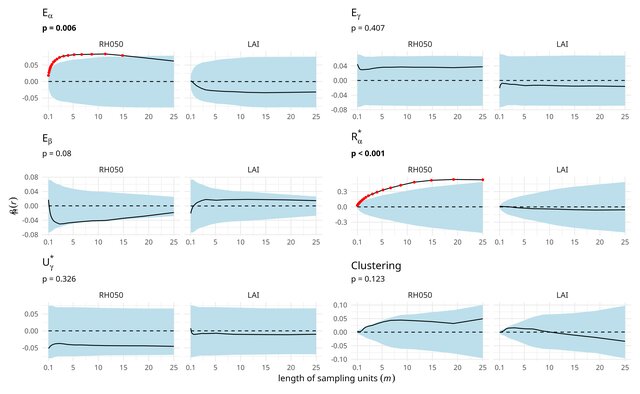
Forest structure and understory functional diversity at multiple scales: The importance of median tree height
de Benedictis
,
Luciano Ludovico Maria
,
Chelli
,
Stefano
,
Zhu
,
Zhengxue
,
Cervellini
,
Marco
,
Canullo
,
R.
,
Chianucci
,
Francesco
,
Puletti
,
Nicola
,
Tsakalos
,
James L.
,
Bartha
,
Sándor
,
Campetella
,
Giandiego
Spectral heterogeneity from the spaceborne imaging spectrometer EnMAP reveals biodiversity patterns in forest ecosystems
Torresani
,
Michele
,
Rossi
,
Christian
,
Mina
,
Marco
,
Menegaldo
,
Irene
,
Cappuccio
,
Matteo
,
Perrone
,
Michela
,
Hakkenberg
,
Christopher R.
,
Rocchini
,
Duccio
,
Puletti
,
Nicola
,
Stendardi
,
Laura
,
Montagnani
,
Leonardo
,
Tognetti
,
Roberto
Mostra abstract
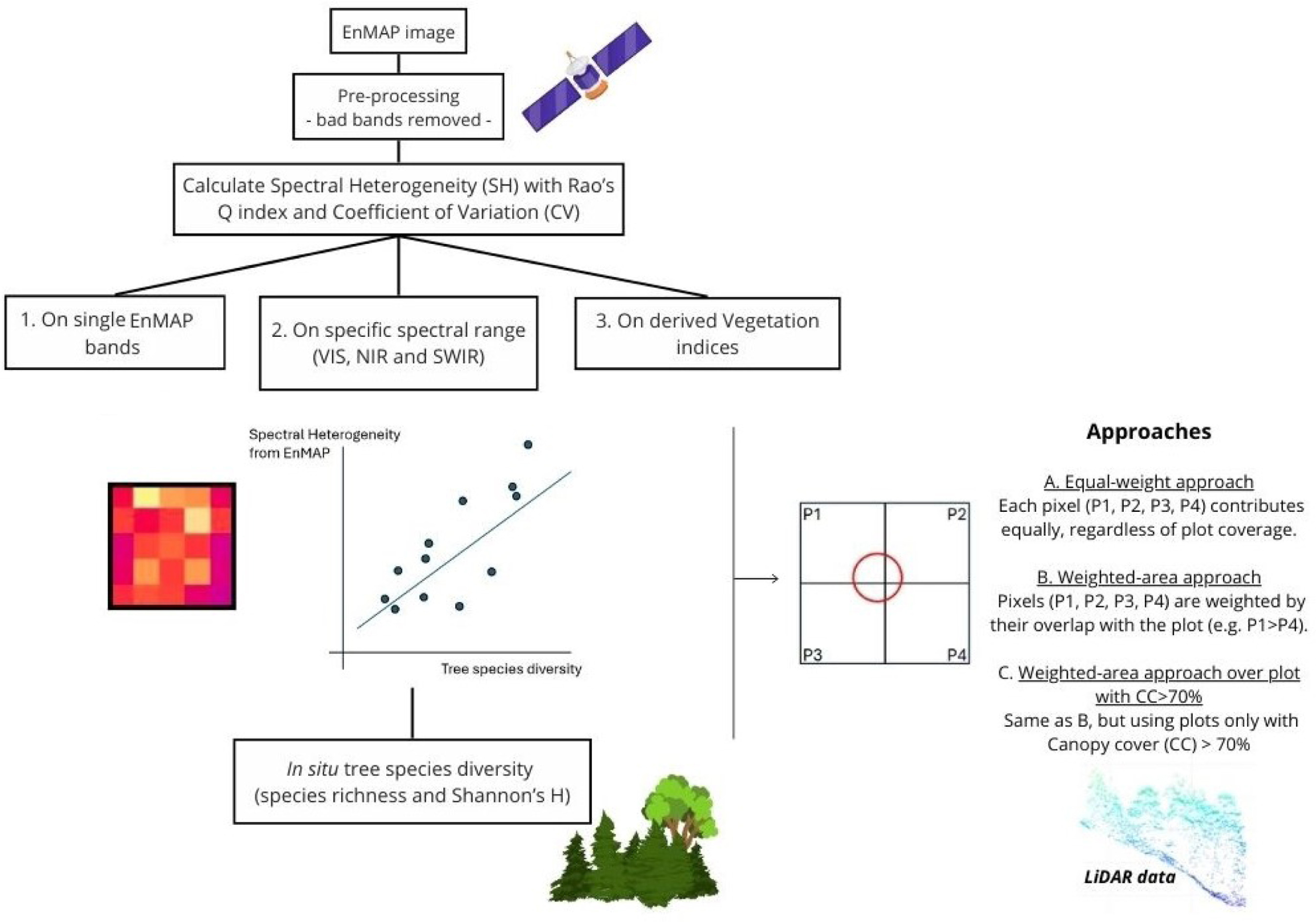
The Spectral Variation Hypothesis (SVH) proposes that spectral heterogeneity (SH), derived from optical data, can serve as a proxy for estimating biodiversity. In this study, we tested the SVH across 42 forest plots in the Italian Alps using imaging spectroscopy data from the EnMAP satellite. We investigated the relationship between SH—quantified using two different metrics, Rao's Q and the coefficient of variation (CV)—and tree species diversity (using Shannon's H index and species richness). We applied three levels of spectral analysis: (1) SH calculated for each individual EnMAP band; (2) SH aggregated across broader spectral ranges (Visible -VIS-, Near Infrared -NIR-, and Shortwave Infrared -SWIR-) and (3) SH derived from vegetation indices (VIs). These analyses were performed under three spatial approaches: (A) a normal approach assigning equal weight to all four EnMAP pixels intersecting a plot; (B) a weighted approach based on the proportional overlap of each pixel with the plot area; and (C) a weighted canopy cover (CC)>70% approach, which included only plots with CC greater than 70% as derived from airborne laser scanning (ALS) LiDAR data. Weak to moderate correlations were observed when SH was derived from single bands, with the strongest relationships in the NIR (R<sup>2</sup> approaching 0.4), followed by the VIS and SWIR regions. A similar trend emerged when SH was aggregated across broader spectral ranges, with the highest correlations again found in the NIR (R<sup>2</sup> up to 0.35). In contrast, lower R<sup>2</sup> values were obtained when SH was computed from specific VIs. The weighted approaches, especially when restricted to plots with CC >70%, consistently yielded higher R<sup>2</sup> values than the equal-weight approach in all three the spectral analysis. Results were consistent across both SH metrics (Rao's Q and CV), with stronger correlations when species richness was used as the biodiversity metric. This work highlights how EnMAP hyperspectral data, despite inherent constraints, can provide valuable insights into forest biodiversity monitoring. © 2025 The Author(s)
CrowNet: a trail-camera canopy monitoring system
Chianucci
,
Francesco
,
Lenzi
,
Alice
,
Minari
,
Emma
,
Guasti
,
Matteo
,
Gisondi
,
Silvia
,
Gonnelli
,
Marco
,
Innocenti
,
Simone
,
Ferrara
,
Carlotta
,
Campanaro
,
Alessandro
,
Ciampelli
,
Paola
,
Cutini
,
Andrea
,
Puletti
,
Nicola
Mostra abstract
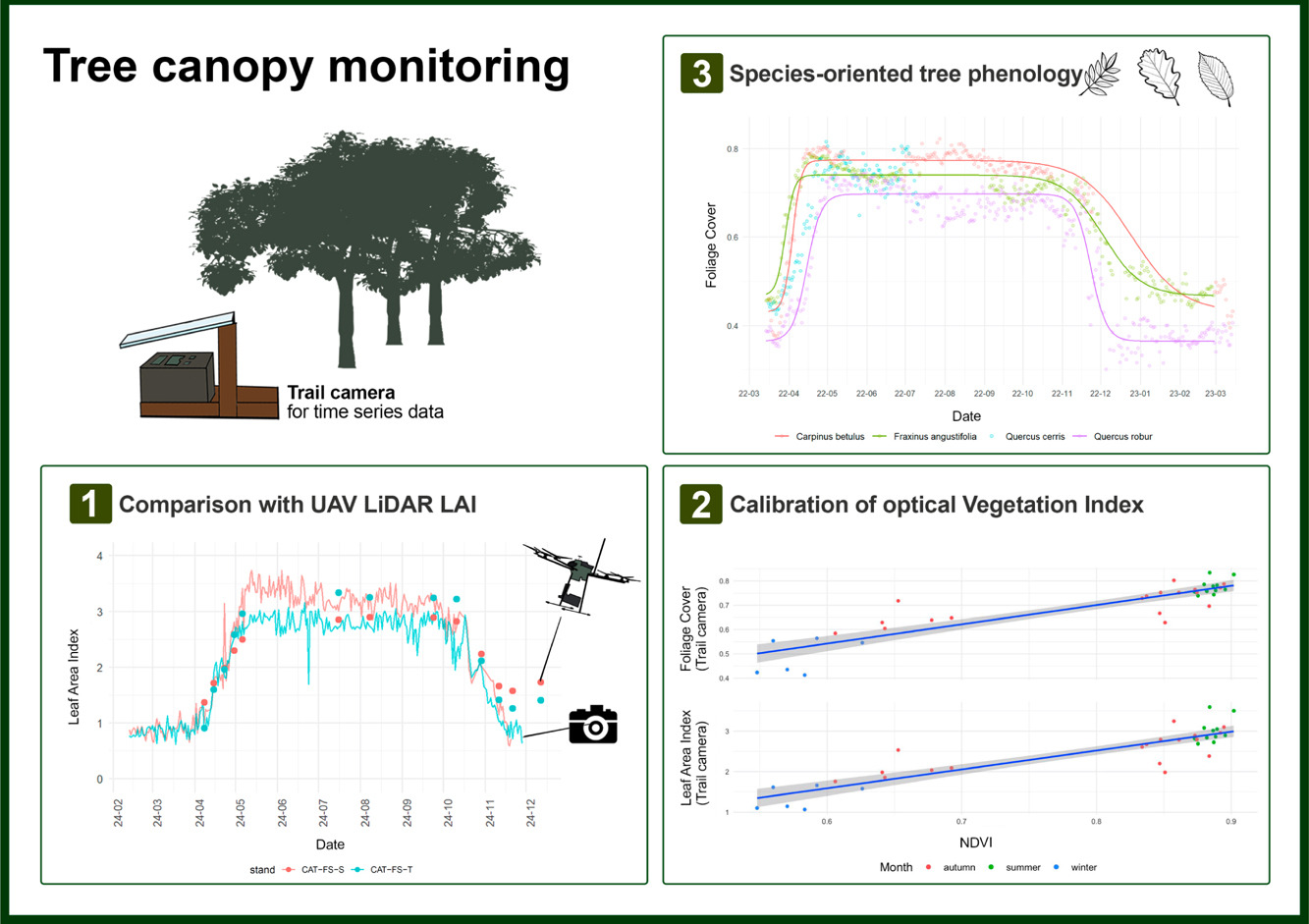
Continuous monitoring of forest canopy structure and phenology is pivotal for the assessment of ecosystem responses to environmental variability and changes. The present study evaluated the use of repeat digital trail cameras as a low-cost, flexible, and accessible in situ monitoring solution for quantifying daily canopy attributes, including effective leaf area index (Le) and canopy cover. A trial camera monitoring network (CrowNet) was established encompassing 20 forest stands in Italy, under different management and environmental conditions, resulting in over 44,000 daily images collected over three years. We demonstrated that taking the mean daily canopy attribute allowed to obtain smooth time series from trail cameras, from which phenological transition dates can be inferred. Daily canopy attributes were validated against manual digital cover photography measurement. To further explore the applicability of this monitoring solution, we performed a comparison between daily Le time series derived from a subset of trail cameras located in beech forests and data collected by multitemporal UAV LiDAR. Results demonstrated the close agreement between the two methods across the entire phenological period (start and end of season). We also illustrated use of continuous trail camera estimates to calibrate a vegetation index (NDVI) to infer leaf area and canopy cover from optical multi-temporal UAV data. We further investigated use of trail camera to detect species-specific differences in tree phenology from time series acquired in a mixed oak-hornbeam forest. We found different canopy structure and phenological transition dates in three broadleaved species (oak, ash, hornbeam), supporting the effectiveness of trail cameras for species-oriented phenology monitoring. We conclude that trail cameras provide a reliable solution for daily canopy monitoring, offering a significant cost-effective and flexible alternative to traditional field methods and providing potential to calibrate, validate or integrate remotely-sensed information. However, camera failures during adverse weather, and the need for more efficient image data quality checking procedures, still represent open challenges. Future improvements, such as weatherproof housing and automated pre-processing screening procedures, are therefore recommended for making trail camera fully operational in ground canopy and phenology monitoring. © 2025 Elsevier B.V.

Multiple drivers of functional diversity in temperate forest understories: Climate, soil, and forest structure effects
Chelli
,
Stefano
,
Bricca
,
Alessandro
,
Tsakalos
,
James L.
,
Andreetta
,
Anna
,
Bonari
,
Gianmaria
,
Campetella
,
Giandiego
,
Carnicelli
,
Stefano
,
Cervellini
,
Marco
,
Puletti
,
Nicola
,
Wellstein
,
Camilla
,
Canullo
,
R.
climate change
functional diversity
bud bank
forest management
plant height
seed mass
specific leaf area
Mostra abstract
In macroecology, shifting from coarse- to local-scale explanatory factors is crucial for understanding how global change impacts functional diversity (FD). Plants possess diverse traits allowing them to differentially respond across a spectrum of environmental conditions. We aim to assess how macro- to microclimate, stand-scale measured soil properties, forest structure, and management type, influence forest understorey FD at the macroecological scale. Our study covers Italian forests, using thirteen predictors categorized into climate, soil, forest structure, and management. We analyzed five traits (i.e., specific leaf area, plant size, seed mass, belowground bud bank size, and clonal lateral spread) capturing independent functional dimensions to calculate the standardized effect size of functional diversity (SES-FD) for all traits (multi-trait) and for single traits. Multiple regression models were applied to assess the effect of predictors on SES-FD. We revealed that climate, soil, and forest structure significantly drive SES-FD of specific leaf area, plant size, seed mass, and bud bank. Forest management had a limited effect. However, differences emerged between herbaceous and woody growth forms of the understorey layer, with herbaceous species mainly responding to climate and soil features, while woody species were mainly affected by forest structure. Future warmer and more seasonal climate could reduce the diversity of resource economics, plant size, and persistence strategies of the forest understorey. Soil eutrophication and acidification may impact the diversity of regeneration strategies; canopy closure affects the diversity of above- and belowground traits, with a larger effect on woody species. Multifunctional approaches are vital to disentangle the effect of global changes on functional diversity since independent functional specialization axes are modulated by different drivers. © 2024 The Authors
Performance assessment of two plotless sampling methods for density estimation applied to some Alpine forests of northeastern Italy
accuracy
conditional inference trees
distance-based density estimator
forest monitoring
ordered distance method
point-centred quarter method
precision
Mostra abstract
In this study, we tested two plotless sampling methods, the ordered distance method and point-centred quarter method, to estimate the tree density and basal area in some managed Alpine forests in northeastern Italy. We selected nine independent forest stands, classified according to the spatial distribution patterns of trees (cluster, random, regular). A plotless sampling survey was simulated within the selected stands and the tree density and basal area were estimated by applying both the ordered distance method and point-centred quarter method. We compared the estimates, in terms of accuracy and preci-sion, between the two methods and against estimates obtained from a simulated survey based on a plot-based sampling method. The point-centred quarter method outperformed the ordered distance method in terms of both accuracy and precision, showing higher robustness towards the bias related to non-random spatial patterns. However, both the plotless methods we tested can provide unbiased accuracy of estimates which, in addition, do not differ from estimates of plot-based sampling. The satisfactory results are encouraging for further tests over other Italian Alpine as well as Apennine forests. If con-firmed, the plotless sampling method, especially the point-centred quarter method, could represent an effective alternative whenever plot-based sampling is deemed redundant, or expensive. © SISEF.
A georeferenced dataset of nocturnal macrolepidoptera: A tool for forest management and biodiversity conservation
Mostra abstract
In this paper we provide a georeferenced dataset of raw data concerning occurrence and abundance of nocturnal macrolepidoptera, an insect group largely recognized as a good ecological indicator of forest ecosystems. Data have been collected by using light traps located in 15 beech and 20 Calabrian black pine forest lots, 20 of which included in Natura 2000 sites. The sampling was carried out monthly lasting from May to late October 2019 and 2020 in order to cover the entire period during which favourable conditions for adult monitoring occurred, and to encompass phenological changes occurring across seasons in moth diversity. The dataset is composed by a total of 42,834 individuals belonging to 363 species. Due to the relatively small attractive radius of used light traps (about 25 m), georeferenced lepidopteran data can be easily correlated to any kind of spatial environmental variables and forest attributes and to their temporal variations being useful to quantify also the effects of long-term ecological drivers. © 2022
Plant functional traits are correlated with species persistence in the herb layer of old-growth beech forests
Campetella
,
Giandiego
,
Chelli
,
Stefano
,
Simonetti
,
Enrico
,
Damiani
,
Claudia
,
Bartha
,
Sándor
,
Wellstein
,
Camilla
,
Giorgini
,
Daniele
,
Puletti
,
Nicola
,
Mucina
,
Ladislav
,
Cervellini
,
Marco
,
Canullo
,
R.
beech
forest
genetics
plant leaf
plant seed
quantitative trait
fagus
forests
plant leaves
heritable
seeds
Mostra abstract
This paper explores which traits are correlated with fine-scale (0.25 m<sup>2</sup>) species persistence patterns in the herb layer of old-growth forests. Four old-growth beech forests representing different climatic contexts (presence or absence of summer drought period) were selected along a north–south gradient in Italy. Eight surveys were conducted in each of the sites during the period spanning 1999–2011. We found that fine-scale species persistence was correlated with different sets of plant functional traits, depending on local ecological context. Seed mass was found to be as important for the fine-scale species persistence in the northern sites, while clonal and bud-bank traits were markedly correlated with the southern sites characterised by summer drought. Leaf traits appeared to correlate with species persistence in the drier and wetter sites. However, we found that different attributes, i.e. helomorphic vs scleromorphic leaves, were correlated to species persistence in the northernmost and southernmost sites, respectively. These differences appear to be dependent on local trait adaptation rather than plant phylogenetic history. Our findings suggest that the persistent species in the old-growth forests might adopt an acquisitive resource-use strategy (i.e. helomorphic leaves with high SLA) with higher seed mass in sites without summer drought, while under water-stressed conditions persistent species have a conservative resource-use strategy (i.e. scleromorphic leaves with low SLA) with an increased importance of clonal and resprouting ability. © 2020, The Author(s).
Climate is the main driver of clonal and bud bank traits in Italian forest understories
Chelli
,
Stefano
,
Ottaviani
,
Gianluigi
,
Simonetti
,
Enrico
,
Wellstein
,
Camilla
,
Canullo
,
R.
,
Carnicelli
,
Stefano
,
Andreetta
,
Anna
,
Puletti
,
Nicola
,
Bartha
,
Sándor
,
Cervellini
,
Marco
,
Campetella
,
Giandiego
clonality
community weighted mean (cwm)
plant-environment linkages
resprouting
soil properties
trait-based ecology
Mostra abstract
The study of plant trait-environment links is rarely focused on traits that inform on space occupancy and resprouting (both affecting plant persistence), especially in forest understories. Traits that can effectively capture such key functions are associated with clonality and bud banks. We hypothesized that: 1) climate is the main driver of clonal and bud bank traits, 2) traits related to space occupancy (e.g., greater lateral spread) are more important in more mesic, richer soils forests, and 3) traits related to resprouting ability (e.g., larger bud bank) are more important in more intensively and recently managed forests. We addressed these hypotheses by analysing a unique dataset that is statistically representative of Italian forests heterogeneity and includes three biogeographic regions (Alpine, Continental, Mediterranean). We recorded data for sixteen climatic, soil and management variables. We calculated community weighted mean (CWM) values of seven clonal and bud bank traits for the forest understory vegetation. We used i) redundancy analysis to assess trait-environment relations, and ii) variance partitioning analyses to identifying the relative role of different groups of abiotic variables on CWM variation of all traits combined together, as well as clonal and bud bank traits taken separately. Climate alone had a pervasive effect in determining patterns of clonal and bud bank traits in Italian forest understories, mainly related to the effects of temperature extremes and seasonality. Unexpectedly, soil and management factors alone showed marginal effects on clonal and bud bank traits. However, soil features influenced trait patterns when joined with climate. Our results confirmed that, at the biogeographic scale, climate played a lion-share role in determining persistence-related traits of forest-floor plants. At the local-scale, other interplaying factors (e.g., management, soil variables) may come into play in shaping patterns of the studied plant traits. This study stressed the importance of examining functional trait patterns along complex environmental gradients. © 2019 Elsevier GmbH
Towards a tool for early detection and estimation of forest cuttings by remotely sensed data
ndvi
forest management
sentinel-2
forest policy
google earth engine
iuti database
lulucf
mediterranean areas
Mostra abstract
Knowing the extent and frequency of forest cuttings over large areas is crucial for forest inventories and monitoring. Remote sensing has amply proved its ability to detect land cover changes, particularly in forested areas. Among various strategies, those focusing on mapping using classification approaches of remotely sensed time series are the most frequently used. The main limit of such approaches stems from the difficulty in perfectly and unambiguously classifying each pixel, especially over wide areas. The same procedure is of course simpler if performed over a single pixel. An automated method for identifying forest cuttings over a predefined network of sampling points (IUTI) using multitemporal Sentinel 2 imagery is described. The method employs normalized difference vegetation index (NDVI) growth trajectories to identify the presence of disturbances caused by forest cuttings using a large set of points (i.e., 1580 "forest" points). We applied the method using a total of 51 S2 images extracted from the Google Earth Engine over two years (2016 and 2017) in an area of about 70 km <sup>2</sup> in Tuscany, central Italy. © 2019 by the authors.
Inference on forest attributes and ecological diversity of trees outside forest by a two-phase inventory
Marchetti
,
Marco
,
Garfì
,
Vittorio
,
Pisani
,
Caterina
,
Franceschi
,
Sara
,
Marcheselli
,
Marzia
,
Corona
,
P.
,
Puletti
,
Nicola
,
Vizzarri
,
Matteo
,
Di Cristofaro
,
Marco
,
Ottaviano
,
Marco
,
Fattorini
,
Lorenzo
Mostra abstract
Key message: Trees outside forests (TOF) have crucial ecological and social-economic roles in rural and urban contexts around the world. We demonstrate that a large-scale estimation strategy, based on a two-phase inventory approach, effectively supports the assessment of TOF’s diversity and related climate change mitigation potential. Context: Although trees outside forest (TOF) affect the ecological quality and contribute to increase the social and economic developments at various scales, lack of data and difficulties to harmonize the known information currently limit their integration into national and global forest inventories. Aims: This study aims to develop and test a large-scale estimation framework to assess ecological diversity and above-ground carbon stock of TOF. Methods: This study adopts a two-phase inventory approach. Results: In the surveyed territory (Molise region, Central Italy), all the attributes considered (tree abundance, basal area, wood volume, above-ground carbon stock) are concentrated in a few dominant species. Furthermore, carbon stock in TOF above-ground biomass is non-negligible (on average: 28.6 t ha<sup>−1</sup>). Compared with the low field sampling effort (0.08% out of 52,796 TOF elements), resulting uncertainty of the estimators are more than satisfactory, especially those regarding the diversity index estimators (relative standard errors < 10%). Conclusion: The proposed approach can be suitably applied on vast territories to support landscape planning and maximize ecosystem services balance from TOF. © 2018, INRA and Springer-Verlag France SAS, part of Springer Nature.
Checking the performance of point and plot sampling on aerial photoimagery of a large-scale population of trees outside forests
Fattorini
,
Lorenzo
,
Puletti
,
Nicola
,
Chirici
,
Gherardo
,
Corona
,
P.
,
Gazzarri
,
C.
,
Mura
,
Matteo
,
Marchetti
,
Marco
tessellation stratified sampling
two-phase sampling
design-based estimation
one-per-stratum stratified sampling
Mostra abstract
The present study investigates some sampling strategies for the estimation of abundance and canopy cover of trees outside forest (TOF) over large areas. A collection of about 53 000 TOF units in Central Italy was acquired by visual, on-screen interpretation of aerial orthophotos and was taken as the reference population with the purpose of investigating: (i) one-phase inventories with sample points located by means of the tessellation stratified sampling (TSS), which involves covering the study region by a grid of regular polygons of equal sizes and randomly and independently selecting a point in each of them; (ii) two-phase inventories with the one-per-stratum stratified sampling adopted in the second phase to select a sample of polygons from the grid and then visit only the points contained in those polygons. Uniform random sampling is also considered in the first phase as a benchmark for tessellation stratified sampling. The sampling schemes adopted to select TOF units at the sample points are as follows: (i) point sampling, (ii) centroid-based plot sampling with plot radius of 50m(CPLS50) or 100 m, and (iii) plot intersect sampling with plot radius of 50 or 100 m. CPLS50 under single-phase TSS proves to be a promising strategy to large-scale TOF inventories. © 2016, Canadian Science Publishing. All rights reserved.
Quantifying the effect of sampling plot size on the estimation of structural indicators in old-growth forest stands
Lombardi
,
Fabio
,
Marchetti
,
Marco
,
Corona
,
P.
,
Merlini
,
Paolo
,
Chirici
,
Gherardo
,
Tognetti
,
Roberto
,
Burrascano
,
Sabina
,
Alivernini
,
Alessandro
,
Puletti
,
Nicola
Mostra abstract
There is increasing awareness that structure-based indicators should be considered for assessing the biological value of late successional forests. In order to increase the unique habitat features critical for old-growth associated species, it is important to identify and rank candidate potential forest sites on the basis of their distinctive structural features. Data on living and deadwood components for the identification of old-growth condition are usually acquired in the considered forest stands by two sampling survey: (i) census performed in relatively large monitoring sites; (ii) network of small sampling units, on which inventory practices are usually based. Several authors argued that choosing between these survey strategies might have substantial effects on the values of common indicators of old-growth condition. Our study aims at (i) assessing the total estimate differences among old-growth structural indicators measured in field plots with different sizes, and (ii) defining the optimal sample size for the reliable assessment of such indicators. The study was carried out in six beech dominated forest stands on the Apennines range in Italy. In each stand, living and deadwood components were surveyed and geocoded in 1-ha square areas. Based on these dataset, circular plots with radii ranging from 4m up to 20m were then considered in order to quantify the effect of sampling plot size on the estimation of four structural indicators: (1) number of living trees; (2) number of large trees (dbh≥50cm); (3) total deadwood volume; (4) number of deadwood elements (snags, dead standing trees; lying dead trees, lying deadwood) with dbh (or average diameter for lying deadwood) ≥ 30cm. We found that the size of the sampling plots should be at least 500 m<sup>2</sup> in order to establish a database for the assessment of the investigated indicators. The census approach should be preferred to the sampling plot approach for old-growth forest stands smaller than 3-5ha. The achieved results contribute to define assessment protocols for characterizing and ranking the degree to which forest stands approximate old-growth condition based on standardized indicators. © 2015 Elsevier B.V.
Integrated forest management to prevent wildfires under mediterranean environments
Corona
,
P.
,
Ascoli
,
Davide
,
Barbati
,
Anna
,
Bovio
,
Giovanni
,
Colangelo
,
Giuseppe
,
Elia
,
Mario
,
Garfì
,
Vittorio
,
Iovino
,
Francesco
,
Lafortezza
,
Raffaele
,
Leone
,
Vittorio
,
Lovreglio
,
Raffella
,
Marchetti
,
Marco
,
Marchi
,
Enrico
,
Menguzzato
,
Giuliano
,
Nocentini
,
Susanna
,
Picchio
,
Rodolfo
,
Portoghesi
,
Luigi
,
Puletti
,
Nicola
,
Sanesi
,
Giovanni
,
Chianucci
,
Francesco
Mostra abstract
This review presents a multidisciplinary framework for integrating the ecological, regulatory, procedural and technical aspects of forest management for fires prevention under Mediterranean environments. The aims are to: i) provide a foreground of wildfire scenario; ii) illustrate the theoretical background of forest fuel management; iii) describe the available fuel management techniques and mechanical operations for fire prevention in forest and wildland-urban interfaces, with exemplification of case-studies; iv) allocate fire prevention activities under the hierarchy of forest planning. The review is conceived as an outline commentary discussion targeted to professionals, technicians and government personnel involved in forestry and environmental management.
Evaluating the effects of environmental changes on the gross primary production of Italian forests
Maselli
,
Fabio
,
Moriondo
,
Marco
,
Chiesi
,
Marta
,
Chirici
,
Gherardo
,
Puletti
,
Nicola
,
Barbati
,
Anna
,
Corona
,
P.
Mostra abstract
A ten-year data-set descriptive of Italian forest gross primary production (GPP) has been recently constructed by the application of Modified C-Fix, a parametric model driven by remote sensing and ancillary data. That data-set is currently being used to develop multivariate regression models which link the inter-year GPP variations of five forest types (white fir, beech, chestnut, deciduous and evergreen oaks) to seasonal values of temperature and precipitation. The five models obtained, which explain from 52% to 88% of the interyear GPP variability, are then applied to predict the effects of expected environmental changes (+2 °C and increased CO<inf>2</inf> concentration). The results show a variable response of forest GPP to the simulated climate change, depending on the main ecosystem features. In contrast, the effects of increasing CO<inf>2</inf> concentration are always positive and similar to those given by a combination of the two environmental factors. These findings are analyzed with reference to previous studies on the subject, particularly concerning Mediterranean environments. The analysis confirms the plausibility of the scenarios obtained, which can cast light on the important issue of forest carbon pool variations under expected global changes. © 2009 by the authors; licensee Molecular Diversity Preservation International, Basel, Switzerland.
What Is Known About the Management of European Beech Forests Facing Climate Change? A Review
Antonucci
,
Serena
,
Santopuoli
,
Giovanni
,
Marchetti
,
Marco
,
Tognetti
,
Roberto
,
Chiavetta
,
U.
,
Garfì
,
Vittorio
Mostra abstract
Purpose of Review: This paper aims to retrace the most significant management strategies adopted across European beech forests over the last 25 years, highlighting those that are most efficient and promising. We investigate five main topics including forest management, forest models, species mixture, genetic, and regeneration. Recent Findings: European beech is one of the most widespread and important tree species for the European forest sector. In the light of the ongoing climate crisis, understanding the growth dynamics and the response of beech forests to climate change is crucial to identify advantageous management strategies. Ecology, growth, management, distribution, interaction with other species, genetic, and regeneration aspects of European beech were investigated in different geographical areas of Europe. Despite recent researches focusing on climate change issues, how adaptation and mitigation measures can be integrated into silvicultural guidelines to improve the resilience of European beech forests remains unclear. Summary: To answer this question, we collected and reviewed articles about the management of European beech facing climate change, which were published in peer-reviewed journals over the last 25 years. Articles were grouped into five geographic European areas, according to the classification used by the State of Europe’s forests. Obtained articles were further clustered into five main topics: management, mixed forest, modelling, genetic, and regeneration. The review highlighted the importance of using long-term monitoring plots to understand the effect of climate change on the stability of European beech forests, suggesting climate-smart measures that would help these forests adapt to climate change. © 2021, The Author(s), under exclusive licence to Springer Nature Switzerland AG.
Monitoring spring phenology in Mediterranean beech populations through in situ observation and Synthetic Aperture Radar methods
Proietti
,
R.
,
Antonucci
,
Serena
,
Monteverdi
,
Maria Cristina
,
Garfì
,
Vittorio
,
Marchetti
,
Marco
,
Plutino
,
Manuela
,
Di Carlo
,
Marco
,
Germani
,
Andrea
,
Santopuoli
,
Giovanni
,
Castaldi
,
Cristiano
,
Chiavetta
,
U.
Mostra abstract
The interest in tree phenology monitoring is increasing because this trait is a robust indicator of the impacts of climate change on natural and managed ecosystems. Different approaches to monitor phenology at different spatial scales, from in situ monitoring to remote sensing, are used to investigate spring and/or autumn phenological changes. In Mediterranean area, most of phenological changes occur during cloudy periods (spring and autumn), leading to a loss of information also for very high temporal resolution satellites. Instead, cloud-uninfluenced sensors, such as radar sensors, can allow to bypass this problem and produce a temporally continuous coverage. In this paper, we analyzed the spring phenology of two European beech (Fagus sylvatica L.) populations, located at different latitudes in Mediterranean area. Weekly in situ monitoring of leaf-out has been correlated with data collected by Synthetic Aperture Radar. Spring phenological phases were monitored in situ following a modified BBCH-code with a 5-scores scale (from 1 - buds closed and covered by scales, to 5 - leaf completely unfolded). The score 3 (young leaves starting to emerge from the bud) was considered the bud break. Different site conditions based on aspect (northern and southern) and altitudinal gradient (high and low altitude) have been considered. The aim was to test and implement a new methodology able to decrease the frequency of the field sampling, using remote data, to extend more detailed information on geographical scale, and to reconstruct past phenology. Results showed a statistically significant different length of the vegetative spring period, spanning from dormant buds, up to leaves completely unfolded, between sites. Through Synthetic Aperture Radar estimation, this study demonstrates that leaf-out can be monitored with an extreme accuracy. The phenophase score 4 and 5 estimation showed the best performance (RMSE < of 4 days), phenophases score 2 and 3 showed promising performances (4 days < RMSE <5 days), while phenophases score 1 seems to be not easily detectable, although it can be extrapolated with an RMSE <6 days. This radar approach fixes the cloud problem typical of multispectral approach and very frequent in phenophase change periods in Mediterranean climate. This study promotes the proposed remote sensing approach as a very useful tool to monitor growing season starting in remote areas, helping to reduce in situ observations and allowing past phenology reconstruction. © 2020 Elsevier Inc.
Harmonized forest categories in central Italy
Chiavetta
,
U.
,
Camarretta
,
Nicolò
,
Garfì
,
Vittorio
,
Ottaviano
,
Marco
,
Chirici
,
Gherardo
,
Vizzarri
,
Matteo
,
Marchetti
,
Marco
Mostra abstract
To support sustainable forest management, planning policies and environmental actions, it is essential to have available common and standardized geospatial information on forest structure, composition and distribution. In this paper we present a harmonized forest categories (HFCs) map of four administrative Regions located in central Italy (i.e. Marche, Abruzzo, Lazio and Molise) at a scale of 1:400,000. The study area extends over 42,246 km<sup>2</sup>, 14,878 km<sup>2</sup> of which are covered by forests. Four regional forest maps were harmonized in order to produce common standardized information on composition, structure and the distribution of forests in central Italy. A forest category is a forest vegetation unit defined by the main tree species composition. In this study we adopted a nomenclature scheme composed of 16 forest and shrubland categories. This work represents the first HFCs map in Italy over a large area. The legend is also harmonized with the European Environment Agency forest types nomenclature. © 2016 Nicolò Camarretta.
Assessing the maintenance of forest resources and their contribution to carbon cycles
Becagli
,
Claudia
,
Bertini
,
Giada
,
Cammarano
,
Mario
,
Cantiani
,
Paolo
,
Čater
,
Matjaž
,
Chiavetta
,
U.
,
Coletta
,
Vittoria
,
Conforti
,
Massimo
,
D'Andrea
,
Ettore
,
Di Salvatore
,
D.
,
Fabbio
,
Gianfranco
,
Ferlan
,
Mitja
,
Ferreira
,
Andreja
,
Ferretti
,
Fabrizio
,
Giovannozzi Sermanni
,
A.
,
Kobler
,
Andrej
,
Kovač
,
Marko
,
Marinšek
,
Aleksander
,
Micali
,
Marco
,
Pellicone
,
Gaetano
,
Planinšek
,
Špela
,
Rezaei
,
N.
,
Sicuriello
,
Flavia
,
Skudnik
,
Mitja
,
Tonti
,
Daniela
Trends of ungulate species in Europe: not all stories are equal
Cerri
,
Jacopo
,
Chirichella
,
Roberta
,
Arnold
,
Walter
,
Bartoš
,
Luděk
,
Borowik
,
Tomasz
,
Carranza
,
Juan
,
Chianucci
,
Francesco
,
Csányi
,
Sándor
,
Ericsson
,
Göran
,
Heurich
,
Marco
,
Kojola
,
Ilpo
,
Mysterud
,
Atle
,
Pokorny
,
Boštjan
,
Schmidt
,
Krzysztof
,
Šprem
,
Nikica
,
Vicente
,
Joaquín
,
Alagić
,
Ajša
,
Balčiauskas
,
Linas
,
Casaer
,
Jim
,
Cellina
,
Sandra
,
Done
,
Gundega
,
Find’o
,
Slavomír
,
Fonseca
,
Carlos M.M.S.
,
Gačić
,
Dragan P.
,
Melovski
,
Dime
,
Ozoliņš
,
Jânis
,
Papaioannou
,
Haritakis I.
,
Pusenius
,
Jyrki
,
Randveer
,
Tiit
,
Ruusila
,
Vesa
,
Saint-Andrieux
,
Christine
,
Veeroja
,
Rauno
,
Apollonio
,
Marco
hunting bags
reforestation
rural abandonment
time-series analysis
wild ungulates
wildlife management
Mostra abstract
Wild ungulates have deep impacts on socio-ecological systems, and analyzing large-scale population trends in a multispecies set can identify their environmental and socio-economic drivers. We collected annual hunting bags (n = 11,046, period 1975–2018) of European roe deer, red deer, wild boar, fallow deer, mouflon, northern chamois and moose, across Europe. We identified different temporal trends in their hunting bags and evaluated the social and environmental drivers of their relative abundances. The number of harvested red deer and fallow deer, increased steadily across Europe, with minor differences among countries, despite variations in land use and climate. On the contrary, European roe deer harvests have decreased in six European countries since the late 1990s, probably due to landscape changes and locally also due to predation, interspecific competition, and/or increasing temperatures. Northern chamois harvests in Austria and Switzerland have decreased markedly, probably due to increasing temperatures, which decrease the survival of kids at high altitudes. Wild boar harvests have decreased in Poland, Estonia, Latvia, and Lithuania since the African Swine Fever outbreak in 2013–2014. Minor differences emerged between countries adopting different management regimes for wild ungulates. While many studies pointed out landscape changes as the cornerstone for the increase in wild ungulates across Europe, our research emphasizes important species-specific differences. There is a need to predict how landscape dynamics, climate change and recovering large carnivores will affect populations of species already showing signs of decline, like the European roe deer or the northern chamois. © The Author(s), under exclusive licence to Mammal Research Institute Polish Academy of Sciences 2026.
Epiphytic lichen diversity and sustainable forest management criteria and indicators: A multivariate and modelling approach in coppice forests of Italy
Brunialti
,
Giorgio
,
Frati
,
Luisa
,
Calderisi
,
Marco
,
Giorgolo
,
Francesca
,
Bagella
,
Simonetta
,
Bertini
,
Giada
,
Chianucci
,
Francesco
,
Fratini
,
Roberto
,
Gottardini
,
Elena
,
Cutini
,
Andrea
Mostra abstract
Epiphytic lichens represent one of the most suitable indicators of forest continuity and management, especially in the context of ancient and old-growth forests. Nevertheless, they have not yet been included among Sustainable Forest Management (SFM) indicators to which Pan-European forest policy and governance refer. In addition, currently adopted SFM indicators are mainly designed for high forests rather than coppice forests, despite the fact that today this management system covers more than 10% of the total European forests. In this study we investigated these two issues by examining epiphytic lichen diversity in three coppice forest stands, located in the two Italian regions of Tuscany and Sardinia. In particular, we addressed: i) the role of lichen diversity as SFM indicator and ii) its relationship with consolidated and new SFM indicators dealing with structural, health, biodiversity, protective and socioeconomic functions. Multivariate Factor Analysis and Generalised Linear Models were adopted for data analysis. We found that lichen diversity and the frequency of single sensitive species were mainly related to the biodiversity of plants and fungi (Criterion 4), the health and vitality of the forests (Criterion 2) and their protective functions (Criterion 5). Furthermore, our results show that the lichen species highlighted by the models may represent suitable indicators in long-term studies, especially in relation to complex and interconnected aspects of sustainable forest management. Although our findings represent a first contribute to this issue, more in-depth researches will be needed to clarify further aspects of the complex interactions among SFM indicators in the context of coppice forests. © 2020 Elsevier Ltd
TRY plant trait database – enhanced coverage and open access
Kattge
,
Jens
,
Bönisch
,
Gerhard
,
Díaz
,
Sandra M.
,
Lavorel
,
Sandra
,
Prentice
,
Iain Colin
,
Leadley
,
Paul W.
,
Tautenhahn
,
Susanne
,
Werner
,
Gijsbert
,
Aakala
,
Tuomas
,
Abedi
,
Mehdi
,
Acosta
,
Alicia Teresa Rosario
,
Adamidis
,
George C.
,
Adamson
,
Kairi
,
Aiba
,
Masahiro
,
Albert
,
Cécile Hélène
,
Alcántara
,
Julio M.
,
Alcázar C
,
Carolina
,
Aleixo
,
Izabela
,
Ali
,
Hamada E.
,
Amiaud
,
Bernard
,
Ammer
,
Christian
,
Amoroso
,
Mariano Martín
,
Anand
,
Madhur
,
Anderson
,
Carolyn G.
,
Anten
,
Niels P.R.
,
Antos
,
Joseph A.
,
Apgaua
,
Deborah Mattos Guimarães
,
Ashman
,
Tia Lynn
,
Asmara
,
Degi Harja
,
Asner
,
Gregory P.
,
Aspinwall
,
Michael J.
,
Atkin
,
Owen K.
,
Aubin
,
Isabelle
,
Baastrup-Spohr
,
Lars
,
Bahalkeh
,
Khadijeh
,
Bahn
,
Michael
,
Baker
,
Timothy R.
,
Baker
,
William J.
,
Bakker
,
Jan P.
,
Baldocchi
,
Dennis D.
,
Baltzer
,
Jennifer L.
,
Banerjee
,
Arindam
,
Baranger
,
Anne
,
Barlow
,
Jos B.
,
Barneche
,
Diego R.
,
Baruch
,
Zdravko
,
Bastianelli
,
Denis
,
Battles
,
John J.
,
Bauerle
,
William L.
,
Bauters
,
Marijn
,
Bazzato
,
Erika
,
Beckmann
,
Michael
,
Beeckman
,
Hans
,
Beierkuhnlein
,
Carl
,
Bekker
,
Renée M.
,
Belfry
,
Gavin
,
Belluau
,
Michaël
,
Beloiu Schwenke
,
Mirela
,
Benavides
,
Raquel
,
Benomar
,
Lahcen
,
Berdugo-Lattke
,
Mary Lee
,
Berenguer
,
Erika
,
Bergamin
,
Rodrigo Scarton
,
Bergmann
,
Joana
,
Carlucci
,
Marcos B.
,
Berner
,
Logan T.
,
Bernhardt-Römermann
,
Markus
,
Bigler
,
Christof
,
Bjorkman
,
Anne D.
,
Blackman
,
Chris J.
,
Blanco
,
Carolina Casagrande
,
Blonder
,
Benjamin Wong
,
Blumenthal
,
Dana M.
,
Bocanegra-González
,
Kelly Tatiana
,
Boeckx
,
Pascal
,
Bohlman
,
Stephanie Ann
,
Böhning-Gaese
,
Katrin
,
Boisvert-Marsh
,
Laura
,
Bond
,
William J.
,
Bond-Lamberty
,
Ben P.
,
Boom
,
Arnoud
,
Boonman
,
Coline C.F.
,
Bordin
,
Kauane Maiara
,
Boughton
,
Elizabeth H.
,
Boukili
,
Vanessa K.S.
,
Bowman
,
David M.J.S.
,
Bravo
,
Sandra Josefina
,
Brendel
,
Marco R.
,
Broadley
,
Martin R.
,
Brown
,
Kerry A.
,
Bruelheide
,
Helge
,
Brumnich
,
Federico
,
Bruun
,
Hans Henrik
,
Bruy
,
David
,
Buchanan
,
Serra Willow
,
Bucher
,
Solveig Franziska
,
Buchmann
,
Nina
,
Buitenwerf
,
Robert
,
Bunker
,
Daniel E.
,
Bürger
,
Jana
functional diversity
data coverage
data integration
data representativeness
plant traits
try plant trait database
Mostra abstract
Plant traits—the morphological, anatomical, physiological, biochemical and phenological characteristics of plants—determine how plants respond to environmental factors, affect other trophic levels, and influence ecosystem properties and their benefits and detriments to people. Plant trait data thus represent the basis for a vast area of research spanning from evolutionary biology, community and functional ecology, to biodiversity conservation, ecosystem and landscape management, restoration, biogeography and earth system modelling. Since its foundation in 2007, the TRY database of plant traits has grown continuously. It now provides unprecedented data coverage under an open access data policy and is the main plant trait database used by the research community worldwide. Increasingly, the TRY database also supports new frontiers of trait-based plant research, including the identification of data gaps and the subsequent mobilization or measurement of new data. To support this development, in this article we evaluate the extent of the trait data compiled in TRY and analyse emerging patterns of data coverage and representativeness. Best species coverage is achieved for categorical traits—almost complete coverage for ‘plant growth form’. However, most traits relevant for ecology and vegetation modelling are characterized by continuous intraspecific variation and trait–environmental relationships. These traits have to be measured on individual plants in their respective environment. Despite unprecedented data coverage, we observe a humbling lack of completeness and representativeness of these continuous traits in many aspects. We, therefore, conclude that reducing data gaps and biases in the TRY database remains a key challenge and requires a coordinated approach to data mobilization and trait measurements. This can only be achieved in collaboration with other initiatives. © 2019 The Authors. Global Change Biology published by John Wiley & Sons Ltd
Drivers of vascular species diversity on floodplain poplar stands: An integrated approach for ecological and functional assessment
Corli
,
Anna
,
Vannucchi
,
Francesca
,
Traversari
,
Silvia
,
Orsenigo
,
Simone
,
Giovannelli
,
Alessio
,
Chiarabaglio
,
Pier Mario
,
Chianucci
,
Francesco
,
Calfapietra
,
Carlo
,
Scartazza
,
Andrea
,
Mascherpa
,
Marco Carlo
,
Traversi
,
Maria Laura
,
Cristaldi
,
Luca
,
Trentanovi
,
Giovanni
soil properties
stand structure
management
populus spp.
soil enzymatic activities
vascular plants diversity
Mostra abstract
Biodiversity restoration is pivotal to enhance natural ecological processes in riparian ecosystems, affected by intensive human impact. Improving the riparian area functionality through new plantations is an effective Nature-based Solution. Poplar plantations have great potential for preventing soil erosion and providing habitats, but their impact on biodiversity has been little studied. Aims of this study were to: (1) investigate the effect of different poplar woodland management on vascular species diversity; (2) define the main drivers of vascular plant species richness, community composition, invasiveness and functional strategies. In three sites (Po river, Italy), an integrated survey protocol was applied to assess vascular species diversity, stand structure and soil properties. For each site, three stands with different management (cultivated, semi-natural and natural) were surveyed. Differences among all stand structural parameters and the management types were found. Tree diameter did not change between natural and seminatural stands but mean quadratic diameter of seminatural stands (28.1 cm) was similar to cultivated ones (26.8 cm). While cultivated stands showed the highest species richness (mean 28 species), semi-natural stands showed the highest number of native species (82 %) and an efficient soil N cycle (microbial N limitation, MNL < 0). The total Ca and MNL in soil resulted the main drivers of species diversity in the studied poplar stands. Semi-natural stands highlighted the best trade-off amongst vascular plant species diversity, invasiveness and soil process. The used integrated approach was effective and extendable to ecological and functional assessment of poplar riparian forests under different management gradients. © 2025 The Authors
Linking Acoustic Indices to Vegetation and Microclimate in a Historical Urban Garden: Setting the Stage for a Restorative Soundscape
Portaccio
,
Alessia
,
Chianucci
,
Francesco
,
Pirotti
,
Francesco
,
Piragnolo
,
Marco
,
Sozzi
,
Marco
,
Zangrossi
,
Andrea
,
Celli
,
Miriam
,
Mazzella Di Bosco
,
Marta
,
Bolognesi
,
Monica
,
Sella
,
Enrico
,
Corbetta
,
Maurizio
,
Pazzaglia
,
Francesca
,
Cavalli
,
R.
Mostra abstract
Urban soundscapes are increasingly recognized as fundamental for both ecological integrity and human well-being, yet the complex interplay between the vegetation structure, seasonal dynamics, and microclimatic factors in shaping these soundscapes remains poorly understood. This study tests the hypothesis that vegetation structure and seasonally driven biological activity mediate the balance and the quality of the urban acoustic environment. We investigated seasonal and spatial variations in five acoustic indices (NDSI, ACI, AEI, ADI, and BI) within a historical urban garden in Castelfranco Veneto, Italy. Using linear mixed-effects models, we analyzed the effects of season, microclimatic variables, and vegetation characteristics on soundscape composition. Non-parametric tests were used to assess spatial differences in vegetation metrics. Results revealed strong seasonal patterns, with spring showing increased NDSI (+0.17), ADI (+0.22), and BI (+1.15) values relative to winter, likely reflecting bird breeding phenology and enhanced biological productivity. Among microclimatic predictors, temperature (p < 0.001), humidity (p = 0.014), and solar radiation (p = 0.002) showed significant relationships with acoustic indices, confirming their influence on both animal behaviour and sound propagation. Spatial analyses showed significant differences in acoustic patterns across points (Kruskal–Wallis p < 0.01), with vegetation metrics such as tree density and evergreen proportion correlating with elevated biophonic activity. Although the canopy height model did not emerge as a significant predictor in the models, the observed spatial heterogeneity supports the role of vegetation in shaping urban sound environments. By integrating ecoacoustic indices, LiDAR-derived vegetation data, and microclimatic parameters, this study offers novel insights into how vegetational components should be considered to manage urban green areas to support biodiversity and foster acoustically restorative environments, advancing the evidence base for sound-informed urban planning. © 2025 by the authors.
Behaviour of Brown Bears Under Fluctuating Resource Availability
Tattoni
,
Clara
,
Corradini
,
Andrea
,
Chianucci
,
Francesco
,
Ciolli
,
Marco
,
Giusti
,
Roberta
,
Bragalanti
,
Natalia
,
Cagnacci
,
Francesca
,
Martinoli
,
Adriano
,
Preatoni
,
Damiano G.
,
Bisi
,
Francesco
Mostra abstract
Mast seeding, the variable and intermittent production of seeds, has cascading effects on ecosystem functioning. This study explores its influence on the brown bear populations in the Italian Alps, focusing on beechnuts (Fagus sylvatica L.), the primary food source for bears in the region. Using historical data and field sampling, we estimated and mapped the annual seed biomass from 2007 to 2021 for the province of Trento. The energy content of beechnuts was assessed through high heating values, providing the caloric resources available. Data on beechnuts production, records of damages and GPS data from 16 Eurasian brown bears were integrated to perform a temporal and spatial analysis at home range and at landscape level. Standardised damages to beehives and livestock decreased during mast years, suggesting that bears met their trophic needs through natural food sources. In fact, bears used more agricultural areas and less beech forest during years of beech crop failure. At landscape level, agriculture and pasture areas close to beech forests and distant from cities showed a higher risk of damage, providing a tool to anticipate management actions. This work provides insights on the ecological dynamics and conservation implications of brown bears in the study area by mapping the spatial and temporal aspects of mast seeding and bear-related damages. © 2025 The Author(s). Ecology and Evolution published by British Ecological Society and John Wiley & Sons Ltd.
Managed forests are a stronghold of non-native beetles in Europe
Basile
,
Marco
,
Lachat
,
Thibault
,
Balducci
,
Lorenzo
,
Chianucci
,
Francesco
,
Chojnacki
,
Lucas
,
Archaux
,
Frédéric
,
N Avtzis
,
Dimitrios N.
,
Bouget
,
Christophe
,
de Smedt
,
Pallieter
,
Doerfler
,
Inken
,
Dumas
,
Yann
,
Elek
,
Zoltán
,
Gosselin
,
Marion
,
Goßner
,
Martin M.
,
Heilmann-Clausen
,
Jacob
,
Hofmeister
,
Jeňýk
,
Hošek
,
Jan
,
Janssen
,
Philippe
,
Justesen
,
Mathias Just
,
Hansen
,
Aslak Kappel
,
Schmidt
,
Inger Kappel
,
Kepfer-Rojas
,
Sebastian
,
Mårell
,
Anders
,
Matula
,
Radim
,
Müller
,
Jörg C. C.
,
Nordén
,
Björn
,
Ódor
,
Péter
,
Paillet
,
Yoan
,
Ravera
,
Sonia
,
Sitzia
,
Tommaso
,
Tinya
,
Flóra
,
Burrascano
,
Sabina
,
Brockerhoff
,
Eckehard G.
Mostra abstract
The species richness of vascular plants in forests can have contrasting effects on the occurrence of non-native insects. The establishment of non-native insect populations may be facilitated by low plant species richness, which reflects the availability of few but easily accessible resources, or hampered by high plant species richness due to spatial dilution of resources or biotic resistance (i.e., resistance against biological invasions). The relationship between the species richness of plants and non-native insects is likely influenced by disturbance regimes, which, in European forests, mostly consists of timber harvesting. We investigated this relationship considering two major forest attributes: (i) species richness of non-native vascular plants and (ii) forest management. From 1101 forest plots in Europe, we gathered occurrences of 1212 vascular plant species, including 160 non-native species, and of 2404 beetle species, including 29 non-native species. We tested the relationship between the species richness of non-native beetles and plants using non-linear quantile regressions. We disentangled the effect of non-native plant species richness from that of management on the species richness of non-native beetles, while accounting for forest structural variables, using structural equation models. We found clear evidence of a hump-shaped relationship between non-native beetle and plant species richness. The general shape of the relationship persisted when considering only woody or non-woody plants, as well as only non-native plants. The relationship was also similar between managed and unmanaged forests. However, the proportion of non-native beetles in managed forests was higher than in unmanaged forests at the same plant species richness. Management had a direct negative effect on non-native beetle species richness, whereas non-native plant species richness had a direct positive effect. When considering all direct and indirect effects, management facilitated the occurrence of non-native beetles indirectly via non-native plants rather than directly. Synthesis and applications. Species richness of native and non-native vascular plants modulates the species richness of non-native beetles through relationships with opposite signs. The interplay with management regimes and forest structures determines whether non-native beetles are promoted. Forest management aimed at reducing the intensity of disturbance while encouraging native plant species richness could promote the dominance of dilution effects and biotic resistance and could moderate the establishment of non-native insects. © 2025 The Author(s). Journal of Applied Ecology © 2025 British Ecological Society.
Reliability of canopy photography for forest ecology and biodiversity studies
von Meijenfeldt
,
Anouk
,
Chianucci
,
Francesco
,
Rigo
,
Francesca
,
Ottenburghs
,
Jente
,
Hilpold
,
Andreas
,
Mina
,
Marco
leaf area index
canopy photography
canopy structure
hemispherical photography
mountain forests
understory vegetation
Mostra abstract
Understory is a key component of forest biodiversity. The structure of the forest stand and the horizontal composition of the canopy play a major role on the light regime of the understory, which in turn affects the abundance and the diversity of the understory plant community. Reliable assessments of canopy structural attributes are essential for forest research and biodiversity monitoring programs, as well as to study the relationship between canopy and understory plant communities. Canopy photography is a widely used method but it is still not clear which photographic techniques is better suited to capture canopy attributes at stand-level that can be relevant in forest biodiversity studies. For this purpose, we collected canopy structure and understory plant diversity data on 51 forest sites in the north-eastern Italian Alps, encompassing a diversity of forest types from low-elevation deciduous, to mixed montane stands to subalpine coniferous forests. Canopy images were acquired using both digital cover (DCP) and hemispherical (DHP) photography, and analysed canopy structural attributes. These attributes were then compared to tree species composition data to evaluate whether they were appropriate to differentiate between forest types. Additionally, we tested what canopy attributes derived from DCP and DHP best explained the species composition of vascular plants growing in the understory. We found that hemispherical canopy photography was most suitable to capture differences in forest types, which was best expressed by variables such as leaf inclination angle and canopy openness. On our sites, DHP-based canopy attributes were also able to better distinguish between different conifer forests. Leaf clumping was the most important attribute for determining plant species distribution of the understory, indicating that diverse gap structures create different microclimate conditions enhancing diverse plant species with different ecological strategies. This study supports the reliability of canopy photography to derive meaningful indicators in forest and biodiversity research, but also provide insights for increasing understory diversity in managed forests of high conservation value. © 2025
Monitoring hybrid poplar plantations using continuous canopy photography: influence of clone and water status
Mostra abstract
Hybrid poplar plantations are essential for bioenergy, pulp and paper industries, and contribute to carbon sequestration and environmental restoration. Effective plantation management, including monitoring of canopy structure, is crucial to maximize productivity, but traditional inventory methods often lack the spatial and temporal resolution needed for precision forestry application. In this study, we evaluated use of continuous canopy photography for continuous monitoring of poplar plantations. Daily canopy attributes like foliage cover and leaf area index were derived from time-lapse trail cameras. Three poplar clones (Soligo, I-214, and Neva), having differing growth rates and drought tolerances, were tested under different water (irrigated vs non-irrigated) regimes. We demonstrated that continuous canopy attributes allow to quantify significant variations in canopy cover, associated with both clone type and water status. Non-irrigated trials exhibited early senescence and canopy decline, while irrigated clones showed more robust canopy development. We concluded that continuous cameras offer a low-cost, effective solution for improving hybrid poplar plantation management by timely tracking the ability to respond to varying environmental conditions and optimizing resource use. © 2025 Istituto Sperimentale per la Selvicoltura. All rights reserved.
Silvicultural regime shapes understory functional structure in European forests
Chianucci
,
Francesco
,
Napoleone
,
Francesca
,
Ricotta
,
Carlo
,
Ferrara
,
Carlotta
,
Fusaro
,
Lina
,
Balducci
,
Lorenzo
,
Trentanovi
,
Giovanni
,
Bradley
,
Owen
,
Kovács
,
Bence
,
Mina
,
Marco
,
Cerabolini
,
Bruno Enrico Leone
,
Vandekerkhove
,
Kris
,
de Smedt
,
Pallieter
,
Lens
,
Luc
,
Hertzog
,
Lionel R.
,
Verheyen
,
Kris
,
Hofmeister
,
Jeňýk
,
Hošek
,
Jan
,
Matula
,
Radim
,
Doerfler
,
Inken
,
Müller
,
Jörg C. C.
,
Weisser
,
Wolfgang W.
,
Helback
,
Jan
,
Schall
,
Peter
,
Fischer
,
Markus
,
Heilmann-Clausen
,
Jacob
,
Riis-Hansen
,
Rasmus
,
Goldberg
,
Irina
,
Aude
,
Erik
,
Kepfer-Rojas
,
Sebastian
,
Kappel Schmidt
,
Inger
,
Riis-Nielsen
,
Torben
,
Mårell
,
Anders
,
Dumas
,
Yann
,
Janssen
,
Philippe
,
Paillet
,
Yoan
,
Archaux
,
Frédéric
,
Xystrakis
,
Fotios
,
Tinya
,
Flóra
,
Ódor
,
Péter
,
Aszalós
,
Réka
,
Bölöni
,
János
,
Cutini
,
Andrea
,
Bagella
,
Simonetta
,
Sitzia
,
Tommaso
,
Brazaitis
,
Gediminas
,
Marozas
,
Vitas
,
Ujházyová
,
Mariana
,
Ujházy
,
Karol
,
Máliš
,
František
,
Nordén
,
Björn
,
Burrascano
,
Sabina
functional diversity
functional redundancy
forest understory
sustainable forest management
unmanaged forests
ecosystem resilience
silvicultural regime
Mostra abstract
Managing forests to sustain their diversity and functioning is a major challenge in a changing world. Despite the key role of understory vegetation in driving forest biodiversity, regeneration and functioning, few studies address the functional dimensions of understory vegetation response to silvicultural management. We assessed the influence of the silvicultural regimes on the functional diversity and redundancy of European forest understory. We gathered vascular plant abundance data from more than 2000 plots in European forests, each associated with one out of the five most widespread silvicultural regimes. We used generalized linear mixed models to assess the effect of different silvicultural regimes on understory functional diversity (Rao's quadratic entropy) and functional redundancy, while accounting for climate and soil conditions, and explored the reciprocal relationship between three diversity components (functional diversity, redundancy and dominance) across silvicultural regimes through a ternary diversity diagram. Intensive silvicultural regimes are associated with a decrease in functional diversity and an increase in functional redundancy, compared with unmanaged conditions. This means that although intensive management may buffer communities' functions against species or functional losses, it also limits the range of understory response to environmental changes. Policy implications. Different silvicultural regimes influence different facets of understory functional features. While unmanaged forests can be used as a reference to design silvicultural practices in compliance with biodiversity conservation targets, different silvicultural options should be balanced at landscape scale to sustain the multiple forest functions that human societies are increasingly demanding. © 2024 The Author(s). Journal of Applied Ecology published by John Wiley & Sons Ltd on behalf of British Ecological Society.
Relating forest structural characteristics to bat and bird diversity in the Italian Alps
Rigo
,
Francesca
,
Paniccia
,
Chiara
,
Anderle
,
Matteo
,
Chianucci
,
Francesco
,
Obojes
,
Nikolaus
,
Tappeiner
,
Ulrike
,
Hilpold
,
Andreas
,
Mina
,
Marco
Mostra abstract
The global decline of biodiversity has affected European forests, involving many tree species and forest-dwelling threatened animals. An integrated approach linking forest structure and multi-taxon diversity is increasingly needed to maintain the multifunctionality of forest ecosystems. We investigated the relationship between forest structure, deadwood elements, canopy attributes, and tree-related microhabitats on bat and bird communities in the north-eastern Italian Alps. We collected forest attributes, bats, and bird data on 40 forest plots encompassing the diversity of forest types. To assess the different contributions of each forest attribute variables we performed a two-step statistical analysis using generalised and linear models, including bat and bird taxonomical and functional diversity indices as response variables. Our findings reveal that bats and birds respond differently to variation in forest structural characteristics. Specifically, bat species richness was higher in forests with both higher standing tree and lying deadwood volume. The Shannon diversity index for bird community was higher in forests with high volumes of coarse lying deadwood and stumps. Moreover, plots with mature trees, gaps, and heterogeneous diameter distribution fostered the presence of generalist species of bats and birds, while the abundance of tree-related microhabitats was not significant for these two taxa. This study demonstrates that the optimal habitat conditions for bats and birds in Alpine forests are multifaceted. Promoting distinctive elements within forest stands and a complex forest structure through adaptations in forest management interventions would enhance the conservation of multi-taxon forest biodiversity. © 2024 The Authors
Where are we now with European forest multi-taxon biodiversity and where can we head to?
Burrascano
,
Sabina
,
Chianucci
,
Francesco
,
Trentanovi
,
Giovanni
,
Kepfer-Rojas
,
Sebastian
,
Sitzia
,
Tommaso
,
Tinya
,
Flóra
,
Doerfler
,
Inken
,
Paillet
,
Yoan
,
Nagel
,
Thomas A.
,
Mitić
,
Božena
,
Morillas
,
Lourdes
,
Munzi
,
Silvana
,
Van Der Sluis
,
Theo
,
Alterio
,
Edoardo
,
Balducci
,
Lorenzo
,
de Andrade
,
Rafael Barreto
,
Bouget
,
Christophe
,
Giordani
,
P.
,
Lachat
,
Thibault
,
Matošević
,
Dinka
,
Napoleone
,
Francesca
,
Nascimbene
,
Juri
,
Paniccia
,
Chiara
,
Roth
,
Nicolas
,
Aszalós
,
Réka
,
Brazaitis
,
Gediminas
,
Cutini
,
Andrea
,
D'Andrea
,
Ettore
,
de Smedt
,
Pallieter
,
Heilmann-Clausen
,
Jacob
,
Janssen
,
Philippe
,
Kozák
,
Daniel
,
Mårell
,
Anders
,
Mikoláš
,
Martin
,
Nordén
,
Björn
,
Matula
,
Radim
,
Schall
,
Peter
,
Svoboda
,
Miroslav
,
Ujházyová
,
Mariana
,
Vandekerkhove
,
Kris
,
Wohlwend
,
Michael Rudolf
,
Xystrakis
,
Fotios
,
Aleffi
,
Michele
,
Ammer
,
Christian
,
Archaux
,
Frédéric
,
Asbeck
,
Thomas
,
N Avtzis
,
Dimitrios N.
,
Ayasse
,
Manfred
,
Bagella
,
Simonetta
,
Balestrieri
,
Rosario
,
Barbati
,
Anna
,
Basile
,
Marco
,
Bergamini
,
Ariel
,
Bertini
,
Giada
,
Biscaccianti
,
Alessandro Bruno
,
Boch
,
Steffen
,
Bölöni
,
János
,
Bombi
,
Pierluigi
,
Boscardin
,
Yves
,
Brunialti
,
Giorgio
,
Bruun
,
Hans Henrik
,
Buscot
,
François
,
Byriel
,
David Bille
,
Campagnaro
,
Thomas
,
Campanaro
,
Alessandro
,
Chauvat
,
Matthieu
,
Ciach
,
Michał
,
Čiliak
,
Marek
,
Cistrone
,
Luca
,
Pereira
,
Joaò Manuel Cordeiro
,
Daniel
,
Rolf
,
de Cinti
,
Bruno
,
de Filippo
,
Gabriele
,
Dekoninck
,
Wouter
,
Di Salvatore
,
Umberto
,
Dumas
,
Yann
,
Elek
,
Zoltán
,
Ferretti
,
Fabrizio
,
Fotakis
,
Dimitrios G.
,
Frank
,
Tamás
,
Frey
,
Julian
,
Giancola
,
Carmen
,
Gömöryová
,
Erika
,
Gosselin
,
Marion
,
Gosselin
,
Frédéric
,
Goßner
,
Martin M.
,
Götmark
,
Frank
,
Haeler
,
Elena
,
Hansen
,
Aslak Kappel
,
Hertzog
,
Lionel R.
,
Hofmeister
,
Jeňýk
,
Hošek
,
Jan
,
Johannsen
,
Vivian Kvist
,
Justensen
,
Mathias Just
,
Korboulewsky
,
Nathalie
,
Kovács
,
Bence
,
Lakatos
,
Ferenc
,
Landivar
,
Carlos Miguel
,
Lens
,
Luc
,
Lingua
,
Emanuele
forest biodiversity
biodiversity conservation
forest stand structure
multi-taxon
sustainable management
Mostra abstract
The European biodiversity and forest strategies rely on forest sustainable management (SFM) to conserve forest biodiversity. However, current sustainability assessments hardly account for direct biodiversity indicators. We focused on forest multi-taxon biodiversity to: i) gather and map the existing information; ii) identify knowledge and research gaps; iii) discuss its research potential. We established a research network to fit data on species, standing trees, lying deadwood and sampling unit description from 34 local datasets across 3591 sampling units. A total of 8724 species were represented, with the share of common and rare species varying across taxonomic classes: some included many species with several rare ones (e.g., Insecta); others (e.g., Bryopsida) were represented by few common species. Tree-related structural attributes were sampled in a subset of sampling units (2889; 2356; 2309 and 1388 respectively for diameter, height, deadwood and microhabitats). Overall, multi-taxon studies are biased towards mature forests and may underrepresent the species related to other developmental phases. European forest compositional categories were all represented, but beech forests were over-represented as compared to thermophilous and boreal forests. Most sampling units (94%) were referred to a habitat type of conservation concern. Existing information may support European conservation and SFM strategies in: (i) methodological harmonization and coordinated monitoring; (ii) definition and testing of SFM indicators and thresholds; (iii) data-driven assessment of the effects of environmental and management drivers on multi-taxon forest biological and functional diversity, (iv) multi-scale forest monitoring integrating in-situ and remotely sensed information. © 2023 The Authors
MASTREE+: Time-series of plant reproductive effort from six continents
Hacket-Pain
,
Andrew J.
,
Foest
,
Jessie J.
,
Pearse
,
Ian S.
,
LaMontagne
,
Jalene M.
,
Koenig
,
Walter D.
,
Vacchiano
,
Giorgio
,
Bogdziewicz
,
Michał
,
Caignard
,
Thomas
,
Celebias
,
Paulina
,
van Dormolen
,
Joep
,
Fernández-Martínez
,
Marcos
,
Moris
,
Jose V.
,
Palaghianu
,
Ciprian
,
Pesendorfer
,
Mario B.
,
Satake
,
Akiko
,
Schermer
,
Éliane
,
Tanentzap
,
Andrew J.
,
Thomas
,
Peter A.
,
Vecchio
,
Davide
,
Wion
,
Andreas P.
,
Wohlgemuth
,
Thomas
,
Xue
,
Tingting
,
Abernethy
,
Katharine A.
,
Aravena Acuña
,
Marie Claire
,
Barrera
,
Marcelo Daniel
,
Barton
,
Jessica H.
,
Boutin
,
Stan A.
,
Bush
,
Emma R.
,
Donoso Calderón
,
Sergio R.
,
Carevic
,
Felipe S.
,
Castilho
,
Carolina V.
,
Manuel Cellini
,
Juan
,
Chapman
,
Colin A.
,
Chapman
,
H. M.
,
Chianucci
,
Francesco
,
Costa
,
Patricia Da
,
Croisé
,
Luc
,
Cutini
,
Andrea
,
Dantzer
,
Ben J.
,
DeRose
,
Robert Justin
,
Dikangadissi
,
Jean Thoussaint
,
Dimoto
,
Edmond
,
da Fonseca
,
Fernanda Lopes
,
Gallo
,
Leonardo Ariel
,
Gratzer
,
Georg
,
Greene
,
David F.
,
Hadad
,
Martín Ariel
,
Huertas Herrera
,
Alejandro
,
Jeffery
,
Kathryn J.
,
Johnstone
,
Jill F.
,
Kalbitzer
,
Urs
,
Kantorowicz
,
Władysław
,
Klimas
,
Christie Ann
,
Lageard
,
Jonathan G.A.
,
Lane
,
Jeffrey E.
,
Lapin
,
Katharina
,
Ledwoń
,
Mateusz
,
Leeper
,
Abigail C.
,
Lencinas
,
María Vanessa
,
Lira-Guedes
,
Ana Cláudia
,
Lordon
,
Michael C.
,
Marchelli
,
Paula
,
Marino
,
Shealyn
,
Schmidt van Marle
,
Harald
,
McAdam
,
Andrew G.
,
Momont
,
Ludovic R.W.
,
Nicolas
,
Manuel
,
de Oliveira Wadt
,
Lúcia Helena
,
Panahi
,
Parisa
,
Martínez Pastur
,
Guillermo J.
,
Patterson
,
Thomas W.
,
Luis Peri
,
Pablo
,
Piechnik
,
Łukasz
,
Pourhashemi
,
Mehdi
,
Espinoza Quezada
,
Claudia
,
Roig
,
Fidel Alejandro
,
Peña-Rojas
,
Karen A.
,
Rosas
,
Yamina Micaela
,
Schueler
,
Silvio
,
Seget
,
Barbara
,
Soler
,
Rosina M.
,
Steele
,
Michael A.
,
Toro Manríquez
,
Mónica Del Rosario
,
Tutin
,
Caroline E.G.
,
Ukizintambara
,
Tharcisse
,
White
,
Lee J.T.
,
Yadok
,
Biplang Godwill
,
Willis
,
John L.
,
Zolles
,
Anita
,
Żywiec
,
Magdalena
,
Ascoli
,
Davide
Mostra abstract
Significant gaps remain in understanding the response of plant reproduction to environmental change. This is partly because measuring reproduction in long-lived plants requires direct observation over many years and such datasets have rarely been made publicly available. Here we introduce MASTREE+, a data set that collates reproductive time-series data from across the globe and makes these data freely available to the community. MASTREE+ includes 73,828 georeferenced observations of annual reproduction (e.g. seed and fruit counts) in perennial plant populations worldwide. These observations consist of 5971 population-level time-series from 974 species in 66 countries. The mean and median time-series length is 12.4 and 10 years respectively, and the data set includes 1122 series that extend over at least two decades (≥20 years of observations). For a subset of well-studied species, MASTREE+ includes extensive replication of time-series across geographical and climatic gradients. Here we describe the open-access data set, available as a.csv file, and we introduce an associated web-based app for data exploration. MASTREE+ will provide the basis for improved understanding of the response of long-lived plant reproduction to environmental change. Additionally, MASTREE+ will enable investigation of the ecology and evolution of reproductive strategies in perennial plants, and the role of plant reproduction as a driver of ecosystem dynamics. © 2022 The Authors. Global Change Biology published by John Wiley & Sons Ltd.
Testing an expanded set of sustainable forest management indicators in Mediterranean coppice area
Cutini
,
Andrea
,
Ferretti
,
Marco
,
Bertini
,
Giada
,
Brunialti
,
Giorgio
,
Bagella
,
Simonetta
,
Chianucci
,
Francesco
,
Fabbio
,
Gianfranco
,
Fratini
,
Roberto
,
Riccioli
,
Francesco
,
Caddeo
,
C.
,
Calderisi
,
Marco
,
Ciucchi
,
B.
,
Corradini
,
Stefano
,
Cristofolini
,
Fabiana
,
Cristofori
,
Antonella
,
Di Salvatore
,
Umberto
,
Ferrara
,
Carlotta
,
Frati
,
Luisa
,
Landi
,
Sara
,
Marchino
,
Luca
,
Patteri
,
Giacomo
,
Piovosi
,
Maurizio
,
Roggero
,
Pier Paolo
,
Seddaiu
,
Giovanna
,
Gottardini
,
Elena
silviculture
coppice conversion
coppice natural evolution
coppice system
environmental monitoring
sfm criteria
Mostra abstract
Although coppice forests represent a significant part of the European forest area, especially across southern Countries, they received little attention within the Sustainable Forest Management (SFM) processes and scenarios, whose guidelines have been mainly designed to high forests and national scale. In order to obtain “tailored” information on the degree of sustainability of coppices on the scale of the stand, we evaluated (i) whether the main coppice management options result in different responses of the SFM indicators, and (ii) the degree to which the considered SFM indicators were appropriate in their application at stand level. The study considered three different management options (Traditional Coppice TC, coppice under Natural Evolution NE, and coppice under Conversion to high forest by means of periodical thinning CO). In each of the 43 plots considered in the study, which covered three different European Forest Types, we applied a set of eighteen “consolidated” SFM indicators, covering all the six SFM Criteria (FOREST EUROPE, 2020) and, additionally, tested other sixteen novel indicators shaped for agamic forests and/or applicable at stand level. Results confirmed that several consolidated indicators related to resources status (Growing stock and Carbon stock), health (Defoliation and Forest damage), and socio-economic functions (Net revenue, Energy and Accessibility) were highly appropriate for evaluating the sustainability of coppice at stand level. In addition, some novel indicators related to resources status (Total above ground tree biomass), health (Stand growth) and protective functions (Overstorey cover and Understorey cover) proved to be highly appropriate and able to support the information obtained by the consolidated ones. As a consequence, a subset of consolidated SFM indicators, complemented with the most appropriate novel ones, may represent a valid option to support the evaluation of coppice sustainability at stand level. An integrated analysis of the SFM indicators showed that NE and CO display significant higher environmental performances as compared with TC. In addition, CO has positive effects also on socio-economic issues, while TC -which is an important cultural heritage and a silvicultural option that may help to keep local communities engaged in forestry – combines high wood harvesting rates with dense understory cover. Overall, each of the three management options showed specific sustainability values; as a consequence, their coexistence at a local scale and in accordance with the specific environmental conditions and the social-economic context, is greatly recommended since it may fulfill a wider array of sustainability issues. © 2021
Evaluating sampling schemes for quantifying seed production in beech (Fagus sylvatica) forests using ground quadrats
Chianucci
,
Francesco
,
Tattoni
,
Clara
,
Ferrara
,
Carlotta
,
Ciolli
,
Marco
,
Brogi
,
Rudy
,
Zanni
,
Michele
,
Apollonio
,
Marco
,
Cutini
,
Andrea
Mostra abstract
Accurate estimates of seed production are central for understanding mast seeding mechanisms at tree and forest scales, and for designing sustainable management strategies. As trees are long-lived organisms, a long-term perspective is required to understand how reproduction acts during the life cycle of a tree. However, long-term series of seed production are challenging to obtain, as the available seed count procedures strictly rely on field methods, which are cost- and time-consuming, inherently limiting their widespread use at extensive spatial and temporal scales. In this study, we proposed a simple, rapid and flexible field method based on counting the seed in mobile ground quadrats (GQ), which was tested in beech forests. Quadrat measurements were first validated against reference measurements obtained from litter traps (LT) in three permanent plots. Results indicated that GQ provides robust and reliable estimates of seeds, which are not affected by seed predation occurring at the forest floor. Additional quadrat measurements were performed to evaluate the influence of sampling schemes (random, regular, systematic) on the estimation of mean seed production at the plot scale. One hundred quadrats were collected in 0.25 ha beech plots and considered as a reference for evaluating the different sampling schemes and sampling sizes. Measurements were performed in October (three plots), which represented the peak of seed fall, and November (two plots). Results indicate that about 25 randomly located measurements allowed to characterize plot-level mean seed production with an acceptable error below 20%, regardless of the different mean seed production observed between the studied plots and the sampling periods. If the 25 sampling points are arranged in a grid, the obtained mean estimates are within the confidence interval of the reference plot-level values. © 2021 Elsevier B.V.
A comparison of ground-based count methods for quantifying seed production in temperate broadleaved tree species
Tattoni
,
Clara
,
Chianucci
,
Francesco
,
Ciolli
,
Marco
,
Ferrara
,
Carlotta
,
Marchino
,
Luca
,
Zanni
,
Michele
,
Zatelli
,
Paolo
,
Cutini
,
Andrea
Mostra abstract
• Key message: Litter trap is considered the most effective method to quantify seed production, but it is expensive and time-consuming. Counting fallen seeds using a quadrat placed on the ground yields comparable estimates to the litter traps. Ground quadrat estimates derived from either visual counting in the field or image counting from quadrat photographs are comparable, with the latter being also robust in terms of user sensitivity. • Context: Accurate estimates of forest seed production are central for a wide range of ecological studies. As reference methods such as litter traps (LT) are cost- and time-consuming, there is a need of fast, reliable, and low-cost tools to quantify this variable in the field. • Aims: To test two indirect methods, which consist of counting the seeds fallen in quadrats. • Methods: The trial was performed in three broadleaved (beech, chestnut, and Turkey oak) tree species. Seeds are either manually counted in quadrats placed at the ground (GQ) or from images acquired in the same quadrats (IQ) and then compared against LT measurements. • Results: GQ and IQ provide fast and reliable estimates of seeds in both oak and chestnut. In particular, IQ is robust in terms of user sensitivity and potentially enables automation in the process of seed monitoring. A null-mast year in beech hindered validation of quadrats in beech. • Conclusion: Quadrat counting is a powerful tool to estimate forest seed production. We recommend using quadrats and LT to cross-calibrate the two methods in case of estimating seed biomass. Quadrats could then be used more routinely on account of their faster and simpler procedure to obtain measurements at more spatially extensive scales. © 2021, The Author(s).
Characterizing the climatic niche of mast seeding in beech: Evidences of trade-offs between vegetation growth and seed production
Bajocco
,
Sofia
,
Ferrara
,
Carlotta
,
Bascietto
,
Marco
,
Alivernini
,
Alessandro
,
Chirichella
,
Roberta
,
Cutini
,
Andrea
,
Chianucci
,
Francesco
Mostra abstract
Masting is a complex mechanism which is mainly driven by a combination of internal plant resources and climatic conditions. While the driving role of climate in masting is being intensively studied, the interplay among climate, seed production, vegetation growth and phenology still needs further investigation. The objectives of this study were to identify the climatic determinants of different levels of seed production and of NDVI-based vegetation growth and phenology in European beech, and to evaluate if exists a trade-off between these two plant processes. To answer these questions, we used a 25-year-long dataset of beech seed production. We exploited the concept of ecological niche assuming that a mast year can be modeled like a species with variable preferences for different resources, which are the underlying annual climatic conditions; we performed an Ecological Niche Factor Analysis (ENFA), a presence-only modeling tool conventionally used in zoology and botany, and used seasonal (spring, summer, autumn) Standardized Precipitation-Evaporation Index (SPEI) observations, considering the current year (y−0), and up to one (y−1) and two (y−2) years before the masting event. For analyzing the role of vegetation growth and phenology, we used seasonal Normalized Difference Vegetation Index (NDVI) values and associated NDVI-based phenological metrics derived from Landsat imagery. Results indicated the driving role of climate for masting, especially in VHSP years. A moist summer and dry spring at y−2 and a dry summer at y−1 represented the main driving climatic conditions for masting; while a moist spring during the observation year represented the key condition for triggering higher intensities of seed production. Summer NDVI at y−0 and y−1 represented the variables discriminating best between masting and non-masting years and resulted as driven by opposite summer climatic conditions than seed production, thus indicating a trade-off between seed production and vegetation phenology. We concluded that reproduction and vegetation growth act as two different climate-dependent plant responses in beech, in a way that certain conditions through the years promote mast seeding and the opposite conditions favor vegetation growth. The understanding of climate-growth-masting relationships represents indispensable knowledge for providing a holistic view of masting mechanisms and developing adaptive forest management strategies in this species. © 2020
Climate, tree masting and spatial behaviour in wild boar (Sus scrofa L.): insight from a long-term study
Bisi
,
Francesco
,
Chirichella
,
Roberta
,
Chianucci
,
Francesco
,
von Hardenberg
,
Jost Graf
,
Cutini
,
Andrea
,
Martinoli
,
Adriano
,
Apollonio
,
Marco
Mostra abstract
Key message: Climate factors affect seed biomass production which in turn influences autumn wild boar spatial behaviour. Adaptive management strategies require an understanding of both masting and its influence on the behaviour of pulsed resource consumers like wild boar. Context: Pulsed resources ecosystem could be strongly affected by climate. Disantangling the role of climate on mast seeding allow to understand a seed consumer spatial behaviour to design proper wildlife and forest management strategies. Aims: We investigated the relationship between mast seeding and climatic variables and we evaluated the influence of mast seeding on wild boar home range dynamics. Methods: We analysed mast seeding as seed biomass production of three broadleaf tree species (Fagus sylvatica L., Quercus cerris L., Castanea sativa Mill.) in the northern Apennines. Next, we explored which climatic variables affected tree masting patterns and finally we tested the effect of both climate and seed biomass production on wild boar home range size. Results: Seed biomass production is partially regulated by climate; high precipitation in spring of the current year positively affects seed biomass production while summer precipitation of previous year has an opposite effect. Wild boar home range size is negatively correlated to seed biomass production, and the climate only partially contributes to determine wild boar spatial behaviour. Conclusion: Climate factors influence mast seeding, and the negative correlation between wild boar home range and mast seeding should be taken into account for designing integrated, proactive hunting management. © 2018, INRA and Springer-Verlag France SAS, part of Springer Nature.
ManFor C.Bd sites and the drivers of forest functions
Di Salvatore
,
Umberto
,
Tonti
,
Daniela
,
Bascietto
,
Marco
,
Chiavetta
,
U.
,
Cantiani
,
Paolo
,
Fabbio
,
Gianfranco
,
Becagli
,
Claudia
,
Bertini
,
Giada
,
Sansone
,
Dalila
,
Skudnik
,
Mitja
,
Kobal
,
Milan
,
Kutnar
,
Lado
,
Ferreira
,
Andreja
,
Kobler
,
Andrej
,
Kovač
,
Marko
,
Ferretti
,
Fabrizio
A simple multivariate analysis to assess diversity in a complex long-term managed forest area in central Italy
forest biodiversity
forest ecosystems
sustainable forest management
correlation
principal components analysis
Mostra abstract
Today wood and nonwood forest resources management meets and often clashes with environment and biological diversity protection. A main problem is to understand relationships between the different roles of forest biodiversity, site, and management parameters. A multivariate statistical analysis has been carried out in order to interpret relationships between some forest biodiversity components and forest inventory data. Several indices of floristic diversity, species abundance, and structural heterogeneity at stand level have been calculated. The different components of forest biodiversity were separated by principal components analysis. Relations between forest biodiversity indices and site and management attributes have been investigated by two multivariate statistical techniques: bivariate correlation analysis and multiple linear regression. Results showed a high correlation between all the investigated components of forest biodiversity and some topographic and/or forest management attributes. Results also gave ancillary information to define sustainable forest management criteria. © 2014 Società Botanica Italiana.
Mapping forest ecosystem functions for landscape planning in a mountain Natura2000 site, Central Italy
sustainable forest management
forest ecosystem functions
forest landscape management planning
k-nn
multi-criteria and multi-level approach
Mostra abstract
In last decades, numerous efforts have been carried out by the scientific community to assess the multifunctional role of forests in supporting the forest decision-making processes. Recently developed in Italy, the Forest Landscape Management Planning seems to be the most suitable tool to maintain the sustainability balance between forests and local populations. This research identifies and maps different forest ecosystem functions in a mountain Natura2000 Network site by performing a spatial estimation of forest inventory parameters, and implementing a multi-criteria and multi-level approach. Final results on mapping of forest functions show acceptable values of classification accuracy. © 2014 University of Newcastle upon Tyne.
Early and long-term impacts of browsing by roe deer in oak coppiced woods along a gradient of population density
Chianucci
,
Francesco
,
Mattioli
,
Luca
,
Amorini
,
Emilio
,
Giannini
,
Tessa
,
Marcon
,
Andrea
,
Chirichella
,
Roberta
,
Apollonio
,
Marco
,
Cutini
,
Andrea
Mostra abstract
Over the last few decades, wild ungulate populations have exhibited relevant geographic and demographic expansion in most European countries; roe deer is amongst the most widespread ungulate species. The increasing roe deer densities have led to strong impact on forest regeneration; the problem has been recently recognized in coppice woods, a silvicultural system which is widespread in Italy, where it amounts to about 56% of the total national forested area. In this study we investigated the effect of roe deer browsing on the vegetative regeneration of Turkey oak few years after coppicing, along a gradient of roe deer density. A browsing index revealed that browsing impact was high at any given roe deer density but increased at higher density, with the browsing rate ranging from 65% to 79%. We also analyzed the long-term impact of browsing six and eleven years after coppicing under a medium roe deer density. Results indicated the early impact are not ephemeral but produced prolonged impacts through time, with an average reduction in volume of-57% and-41% six and eleven years after coppicing, respectively. Based on these results we proposed integrating browsing monitoring with roe deer density estimation to allow identifying ungulate densities which are compatible with silvicultural and forest management objectives. The proposed browsing index can be regarded as an effective management tool, on account of its simplicity and cost-effectiveness, being therefore highly suitable for routine, large scale monitoring of browsing impact.
Reproductive phenology and conception synchrony in a natural wild boar population
Canu
,
Antonio
,
Scandura
,
Massimo
,
Merli
,
Enrico
,
Chirichella
,
Roberta
,
Bottero
,
Elisa
,
Chianucci
,
Francesco
,
Cutini
,
Andrea
,
Apollonio
,
Marco
Mostra abstract
Reproductive synchrony among gregarious mammals has a strong adaptive value and may lead to cooperative behaviors aimed at maximizing offspring survival. Additionally, temporal clustering of estrus has important implications on individual mating tactics and ultimately affects the degree of polygamy in a population. Although several studies have examined the reproductive biology of wild boar (Sus scrofa), much remains to be understood about the patterns of timing and synchrony of reproduction in natural populations. We analyzed the spatiotemporal distribution of conception dates in an Italian wild boar population taking into account the effects of environmental and individual factors, in order to determine the main variables influencing the timing of reproduction and to detect the signs of a socially-driven reproductive synchrony. Specifically, for each litter belonging to 354 pregnant sows culled between 2006 and 2013 in a mountain area of Tuscany, we determined the conception date (CD) from an estimate of the mean fetal age and the culling date. We then investigated which factors drove the variation in CD, by implementing linear mixed models, Mantel tests and spatial autocorrelation analyses. The selected model showed significant effects of rainfall, temperatures, and previous and current productivity on CD, as well as a strong correlation of CDs among sows culled in close spatial and temporal proximity (i.e., in the same hunting ground and hunting season). Likewise, autocorrelation analyses and Mantel tests consistently indicated that closer sows had similar conception dates. Overall, our results confirm the effect of resource availability and climate on wild boar reproductive phenology, and suggest socially-driven reproductive patterns, in spite of a high turn-over in social groups due to hunting. Finally, possible advantages and evolutionary implications of reproductive synchrony in wild boar are discussed. © 2015 Associazione Teriologica Italiana.
Comparing multisource harmonized forest types mapping: A case study from central italy
Vizzarri
,
Matteo
,
Chiavetta
,
U.
,
Chirici
,
Gherardo
,
Garfì
,
Vittorio
,
Bastrup-Birk
,
Annemarie M.
,
Marchetti
,
Marco
central italy
forest area estimation
forest categories
forest nomenclature systems
forest resources classification
forest resources mapping
forest types
Mostra abstract
The availability of common standardized geospatial information on composition, structure and distribution of forests is essential to support environmental actions, sustainable forest management and planning policies. Forest types maps are suitable tools for supporting both silvicultural and forest planning choices from local to global scale levels. For this reason local authorities may develop forest types maps independently, in which case a standardized/harmonized framework for their comparison and aggregation is essential. At the same time local forest types maps may not be directly related to pan-European forest resources assessments and classification systems. This paper presents results of the harmonization of four forest types maps available for central Italy. The process is based on a bottom-up approach aimed at maintaining the most detailed common nomenclature system across the different Regions. The final results, in terms of forest types area, are compared with several independent sources of information: (i) two forest maps, one developed at national level on the basis of the Corine Land Cover 2006, and one for high resolution forest/non forest classification developed at pan-European level; and (ii) two sample based inventories: the Italian National Forest Inventory (INFC) and the Italian Land Use Inventory (IUTI). The results show that the proposed bottomup harmonization approach is a suitable tool to guarantee the integrity and homogeneity of local forest types nomenclature systems, and to integrate such local data with European standards. ©iForest – Biogeosciences and Forestry
Mast seeding in deciduous forests of the northern Apennines (Italy) and its influence on wild boar population dynamics
Cutini
,
Andrea
,
Chianucci
,
Francesco
,
Chirichella
,
Roberta
,
Donaggio
,
Emanuela
,
Mattioli
,
Luca
,
Apollonio
,
Marco
forest management
forest seed production
game management
pulsed resource
silvicultural treatment
sus scrofa l.
Mostra abstract
Context: Pulsed food resources may strongly affect the population dynamics of several consumer species, with consequences on the ecosystem. One of the most common pulsed resources is forest mast seeding. Aims: We analysed mast seeding in deciduous forests in a mountainous area of northern Apennines and its effect on population dynamics of wild boar (Sus scrofa L.). Methods: We performed a quantitative, 20-year analysis on annual seed production in Turkey oak (Quercus cerris L.), beech (Fagus sylvatica L.) and chestnut (Castanea sativa Mill.) forest stands using litter traps. The wild boar population density was estimated by means of drive censuses and hunting bag records. The role of other biotic (density of predators) and abiotic (climate) factors potentially affecting wild boar mortality was also investigated. Results: Turkey oak and chestnut showed high levels of seed production, whereas lower levels were found in beech. The pulsed resources of chestnut and Turkey oak positively affected piglet density. Analyses also highlighted the influence of snow cover and wolves on wild boar population dynamics. Conclusion: Wild boar can be considered a pulse rate species, the management of which can be improved by annual monitoring of seed production. © 2013 INRA and Springer-Verlag France.
Application of k-nearest neighbor on multispectral images to estimate forest parameters; Aplicação de k-nearest neighbor em imagens multispectrais para a estimativa de parâmetros florestais
Giongo
,
Marcos Vinicius
,
Chiavetta
,
U.
,
Soares Koehler
,
Henrique Soares
,
Machado
,
S. A.
,
Kirchner
,
Flávio Felipe
Mostra abstract
Natural resources management requires several parameters estimate in order to support the identification of the best alternatives to forest areas management. In particular, forest ecosystems require a complex and increasing set of descriptive information, where forest inventories put up important information, however not in a continuous spatial way. Lately, several scientific researches have been focusing on establishing methodologies to relate data from field to those obtained from multispectral images. Modeling these relations can extend the estimates of forest inventory data to not sampled areas. This research evaluated performance of non-parametric analysis using the K-Nearest Neighbor (k-NN) on SPOT 5 images. It evaluated the results obtained from the spatialization of some forest attributes in a forest area located at Molise, Italy. Among several methodologies for spatial distance calculations, the use of multiregressive non-parametric distances revealed the best results. Density and number of species on the ground revealed a Pearson correlation coefficient of = 0.58 as compared to data obtained from multispectral images, lightly lower than the obtained for basal area and volume, which were = 0.62 and 0.71, respectively.
Roe deer (Capreolus capreolus L.) browsing effects and use of chestnut and Turkey oak coppiced areas
Cutini
,
Andrea
,
Bongi
,
Paolo
,
Chianucci
,
Francesco
,
Pagon
,
Nives
,
Grignolio
,
Stefano
,
Amorini
,
Emilio
,
Apollonio
,
Marco
Mostra abstract
Introduction: Roe deer (Capreolus capreolus) browsing pressure on vegetative regeneration of Turkey oak (Quercus cerris) and chestnut (Castanea sativa) and roe deer use of coppiced areas were investigated. Methods: In the Apennines, Central Italy, six experimental areas were chosen, where fenced (ungulate access excluded, protected P) and non-fenced (ungulate influence present, non-protected NP) plots were established after coppicing. From 2002 to 2005, each plot was surveyed twice a year, and number, biomass, collar diameter, and total height of the sprouts were measured. Results:Roe deer had a different effect on the re-growth of Turkey oak and chestnut sprouts. After 4 years, chestnut did not show any browsing-related damage, while in Turkey oak, biomass and height of the sprouts in fenced plots significantly differed from those in non-fenced plots. The results agreed with an experimental browsing index. The outcome is relevant because it represents a quick and reliable field tool to assess the impact on a larger scale, where analytic and quantitative approaches cannot be applied. The locations of 62 adult radiocollared roe deer confirmed an increase in the use of coppiced areas. A utilisation index showed more frequent use of these areas during and after forest work. Contrary to common opinion, logging seemed to attract roe deer in coppiced areas as the vegetation biomass at their disposal increased. © INRA and Springer Science+Business Media B.V. 2011.
Assessment of potential bioenergy from coppice forests trough the integration of remote sensing and field surveys
Lasserre
,
Bruno
,
Chirici
,
Gherardo
,
Chiavetta
,
U.
,
Garfì
,
Vittorio
,
Tognetti
,
Roberto
,
Drigo
,
Rudi
,
Di Martino
,
P.
,
Marchetti
,
Marco
remote sensing
forest inventory
sustainable forest management
coppice
firewood biomass
k-nearest neighbours
Mostra abstract
A spatially explicit knowledge of forest resources is essential to support the sustainable use of wood as a fuel for producing energy (firewood).This paper describes the integrated use of remotely sensed data and sample based forest inventories to derive a biomass map for coppice forest, resulted estimated potential biomass available is contrasted with local domestic consumptions at the municipality level. The test was carried out in an environmentally and socially homogeneous district of Apennine Mountains (Alto Molise, south-central Italy) coupling multispectral high resolution Landsat 7 ETM+ satellite imagery and a local forest inventory trough the application of the non-parametric estimation procedure k-Nearest Neighbours (k-NN). Several forest management scenarios were applied in order to evaluate their impact on the potential availability of firewood from coppice forests.The paper introduces data and methods used and presents the achieved results both in terms of the accuracy of the biomass map produced by k-NN and of the relationship between the potential availability and demand for firewood.These results demonstrated that k-NN is able to estimate the biomass of coppice forest in the test area with an accuracy level comparable with recent similar application of k-NN carried out in Boreal regions (RMSE of 25.6%).The application of different forest management scenarios have a significant impact on local estimated firewood balance between potential supply from coppice forests and demand for domestic consumption, depending of the scenarios the net balance changed up to 84%. © 2010 Elsevier Ltd.
Multi-taxon and forest structure sampling for identification of indicators and monitoring of old-growth forest
Blasi
,
Carlo
,
Marchetti
,
Marco
,
Chiavetta
,
U.
,
Aleffi
,
Michele
,
Audisio
,
P. Aldo
,
Azzella
,
Mattia Martin
,
Brunialti
,
Giorgio
,
Capotorti
,
Giulia
,
Del Vico
,
Eva
,
Lattanzi
,
Edda
,
Persiani
,
Anna Maria
,
Ravera
,
Sonia
,
Tilia
,
Agnese
,
Burrascano
,
Sabina
structural attributes
multi-taxon species lists
species co-occurrence
structure-based indicators
taxon-based indicators
Mostra abstract
The most commonly used old-growth forest indicators are structural attributes; nevertheless, they do not necessarily represent the biodiversity value of old-growth forests. The aim of this study is to analyse the relationships between species richness data of different taxa and structural indicators of old-growth and to identify taxonomic/functional groups, species and structural attributes that may be used as indicators of old growth. To achieve this goal we sampled forest structure, vascular plants, lichens, bryophytes, fungi, saproxylic beetles and birds in mature and old-growth stands in southern Italy. We calculated Spearman's correlation coefficients between species richness data and structural attributes. Analyses of indicator species, co-occurrences and two-way clusters were performed on the multi-taxonomic list. The group of vascular plants most significantly correlated with other groups in terms of species richness; furthermore, it displays the highest proportion of between-group co-occurrences. The resulting multi-taxonomic list of potential indicators may serve as an effective means of detecting and monitoring forest ecosystems; however, for this goal, structure-based indicators, such as forest structural attributes and vascular plant species composition, are of primary importance. © 2010 Società Botanica Italiana.
Linking taxonomical and functional biodiversity of saproxylic fungi and beetles in broad-leaved forests in southern Italy with varying management histories
Persiani
,
Anna Maria
,
Audisio
,
P. Aldo
,
Lunghini
,
Dario
,
Maggi
,
Oriana
,
Granito
,
Vito Mario
,
Biscaccianti
,
Alessandro Bruno
,
Chiavetta
,
U.
,
Marchetti
,
Marco
beetles
coarse woody debris
fungi
old-growth forest
saproxylic communities
taxonomical and functional biodiversity
trophic guilds
Mostra abstract
The fundamental ecological significance of deadwood decomposition in forests has been highlighted in several reviews, some conclusions regarding silviculture being drawn. Old-growth forests are natural centres of biodiversity. Saproxylic fungi and beetles, which are vital components of these ecosystems, occupy a variety of spatial and trophic niches. Fungal and beetle diversity on coarse woody debris (CWD) was analysed in 36 forest sites in the Cilento and Vallo di Diano National Park, Italy. The data were analysed by DCA and Spearman's rank correlation. The results provide empirical evidence of the existence of a pattern of joint colonization of the woody substrate by fungi and beetles, which includes an assemblage of reciprocal trophic roles within fungal/beetle communities. These organisms act together to form a dynamic taxonomical and functional ecosystem component within the complex set of processes involved in wood decay. The variables most predictive of correlations between management-related structural attributes and fungal/beetle species richness and their trophic roles for old-growth forest are: number of logs, number of decay classes and CWD total volume. Deadwood spatiotemporal continuity should be the main objective of forest planning to stop the loss of saproxylic fungal and insect biodiversity. © 2010 Società Botanica Italiana.
Ecological portrayal of old-growth forests and persistent woodlands in the cilento and vallo di Diano National Park (southern Italy)
Marchetti
,
Marco
,
Tognetti
,
Roberto
,
Lombardi
,
Fabio
,
Chiavetta
,
U.
,
Palumbo
,
Giuseppe
,
Sellitto
,
Vincenzo Michele
,
Colombo
,
C. Massimo
,
Iovieno
,
Paola
,
Alfani
,
Anna
,
Baldantoni
,
Daniela
,
Barbati
,
Anna
,
Ferrari
,
Barbara
,
Bonacquisti
,
Sandro
,
Capotorti
,
Giulia
,
Copiz
,
Riccardo
,
Blasi
,
Carlo
biodiversity
mediterranean region
ecological characterization
managed stands
old-growth forests
persistent woodlands
soil
Mostra abstract
The maintenance of certain levels of old forest represents a cornerstone of the EU's biodiversity management strategy. A consensus on a single general ecological definition of old-growth is particularly difficult in Mediterranean Europe. The present paper deals with old-growth forests and persistent woodlands in the Cilento and Vallo di Diano National Park (PNCVD) to give an ecological understanding of forest complexity and dynamics under a multiscale and multidisciplinary perspective. The multiscale approach ranged from the identification and mapping of potential old-growth stands at landscape scale to a two-level field review of forest stand features. Field sampling involved a multidisciplinary team of researchers in forest structure, pedologic environment, soil microbial activity, flora and vegetation and deadwood components. The research provided sound knowledge about old-growthness features in the PNCVD that constitutes a unique case study in the whole Mediterranean basin. The integration of results allowed to: identify main ecosystem functions and the related services of the old-growth forests in the study area; distinguish persistent woodlands, multi-aged stands with old trees deriving from nineteenth-century management practices, from old-growth forests sensu strictu; recognize indicators of direct and indirect impacts of human activities; suggest effective practices for sustainable management in the Mediterranean context. © 2010 Società Botanica Italiana.
Post fire natural regeneration monitoring with the integrated use of high resolution remotely sensed images: The case study of the Pineta di Castel Fusano; Monitoraggio della rinnovazione naturale post incendio tramite l'uso integrato di immagini telerilevate ad alta risoluzione: Il caso della pineta di Castel Fusano
Chirici
,
Gherardo
,
Balsi
,
Marco
,
Bertini
,
Roberta
,
Bonora
,
Nico
,
Chiavetta
,
U.
,
Ottaviano
,
Marco
,
Corona
,
P.
,
Lamonaca
,
Andrea
,
Giuliarelli
,
Diego
,
Mastronardi
,
Alessandro
,
Nardinocchi
,
Giovanni
,
Sambucini
,
Valter
,
Tonti
,
Daniela
,
Marchetti
,
Marco
remote sensing
forest wildfires
k-nearest neighbors
natural re generation
neural networks
spatialisation
Mostra abstract
Stone pine stand of Castel Fusano (Rome) burnt on July the 4th 2000 during a huge wildfire. As a consequence of the fire an intensive natural sexual and asexual regeneration began. In order to monitor such a regeneration field surveys were carried out in 2003 and 2006 in sample plots. Remotely sensed high resolution images from Ikonos and Quick Bird were acquired for the same years. The purpose of this work is to test different methodologies for modeling existing relationships between remotely sensed images and ground collected data in order to estimate and to map both sexual and asexual regeneration. For such a purpose different methodologies were tested: step-wise Muliple Linear Regression, Neural Networks (Relevance-Vector-Machine and the Multi-Layered-Perceptron) and the k-Nearest-Neighbors. These activities were carried out within the framework of the GRINFOMED- MEDIFIRE also developing a specific software named Spatial Forest Modeler (SFM) able to analyze existing relationships between remotely sensed variables and data collected in the field in order to identify the best available models to map and estimate the studied variables acquired on the basis of a field sampling design. The present paper presents data collected in the field, analysis and modeling methods and achieved results. The SFM software is also presented.
Estimation of forest attributes by integration of inventory and remotely sensed data in Alto Molise; Stima di attributi forestali tramite integrazione di dati inventariali e immagini telerilevate nell'Alto Molise
Chiavetta
,
U.
,
Chirici
,
Gherardo
,
Lamonaca
,
Andrea
,
Lasserre
,
Bruno
,
Ottaviano
,
Marco
,
Marchetti
,
Marco
Mostra abstract
Forest ecosystems for their important multifunctional value, need a complex and increasing amount of descriptive information to support their management. Ecological and environmental related attributes have became nowadays important as traditional ones, such as wood growing stock and basal area. The correct application of Sustainable Forest Management criteria is boosted by spatial contiguous knowledge of such attributes. For such a reason in the last years a huge number of scientific experiences in the forest area have been concentrated to study the relationship between data acquired in the field and remotely sensed multispectral images. Models based on such relationships can be used to estimate and map forest attributes acquired in the field on the basis of a statistical sampling design. can be sucould not take in consideration spatially structured data. In last years many researches have focused on possible relationships between field data and remote sensed informations derived from multispectral imagery. Modeling these relationships allows to extend inventory data to not explored surfaces. In this paper were discussed results on spatializing forest biometrical attributes, tree heterogeneity and dimensional heterogeneity assessed during an inventory of Mountain Community "Alto Molise" (IS) throw Spot 5 and Lansat TM 7 imagery. For this purpose a multilinear regression and a k-Nearest Neighbor classifier were used.